News On Japan

Where Can Investors Turn Beyond AI Stocks as Inflation Persists?

TOKYO - As soaring valuations in AI and semiconductor stocks prompt concerns about concentration risk, market analysts are increasingly pointing to energy shares as a potential alternative investment theme in an inflationary environment.

The issue was discussed on TV Tokyo's business program Morningsat, where analysts examined whether investors have become overly dependent on AI-related stocks after a year of extraordinary gains driven by semiconductor manufacturers and data center operators.

The debate comes as major stock markets continue to be dominated by a handful of technology sectors. In both Japan and the United States, semiconductor and AI-related companies have accounted for a large share of market gains, pushing stock indexes to record or near-record levels.

Analysts noted that while enthusiasm surrounding artificial intelligence remains strong, rising inflation and interest rate risks could present challenges for growth-oriented sectors. Semiconductor and technology stocks have historically benefited from lower interest rates, but higher borrowing costs can weigh on valuations by reducing the attractiveness of future earnings growth.

Several factors continue to support inflationary pressures. Crude oil prices remain elevated, contributing to higher transportation and production costs across the economy. Strong consumer spending and rising asset values have also helped sustain demand, raising concerns that inflation may prove more persistent than many investors expect.

If inflation remains stubborn, central banks may be forced to keep monetary policy tighter for longer, increasing the likelihood of higher interest rates.

Against this backdrop, analysts highlighted energy stocks as one of the sectors most closely linked to inflation. Historical analysis comparing stock performance with consumer price inflation over the past two decades showed that energy companies have tended to perform well during periods of rising prices, largely because higher oil and fuel costs often boost their revenues and profits.

By contrast, consumer-related industries such as retail, entertainment, household products, and payment services have generally struggled when inflation accelerates, as higher living costs can reduce discretionary spending.

The program also highlighted how heavily market gains have become concentrated in AI-related themes. An examination of the top-performing stocks in the S&P 500 revealed that many of the biggest winners were directly involved in semiconductors, artificial intelligence infrastructure, or data center development.

Analysts cautioned that while AI remains a powerful long-term growth story, investors seeking diversification may need to consider sectors that benefit from different economic conditions.

With inflation still a major concern and energy prices remaining high, energy-related companies are emerging as one of the few sectors offering an alternative investment narrative outside the technology-driven rally.

Source: テレ東BIZ

News On Japan
POPULAR NEWS

As of 9 p.m. on July 5, Typhoon No. 9 had become a large and extremely powerful storm near the Mariana Islands, moving west-northwest at 20 kilometers per hour. It is forecast to shift slightly northward around Wednesday, July 8, and approach Okinawa and the Sakishima Islands around Friday, July 10, while maintaining very strong intensity and a broad storm zone, raising the risk of significant impacts from wind, waves and rain.

Heavy rain continued across northern Kyushu, with some parts of Fukuoka Prefecture recording 120 millimeters of rainfall in the 24 hours through 3 p.m. on July 5.

A fossil discovered in Osaka has led to Japan’s first finding of its kind, raising the possibility that a giant marine predator believed to have swum in the seas around the Kansai region about 70 million years ago was a previously unknown species.

Former Nissan Motor Chairman Carlos Ghosn said the automaker is in a "state of emergency" and signaled he would be willing to return as chief executive officer, arguing that only a true decision-maker in the CEO role could rescue the company.

The entire Negishi Housing Area in Yokohama, Kanagawa Prefecture, has been returned to Japan for the first time in 79 years, ending its use as a residential district for U.S. military personnel and their families.

MEDIA CHANNELS
         

MORE Business NEWS

The yen has weakened to the 162 range against the dollar for the first time in about 40 years, but the latest market environment differs sharply from the period four decades ago, when Japan was still climbing toward the height of its economic power.

Japan is seeking to turn economic security into diplomatic leverage as the United States deepens its America First approach, with policymakers focusing on semiconductors, critical minerals, energy, shipbuilding and advanced technology as areas where Japan can make itself indispensable to Washington.

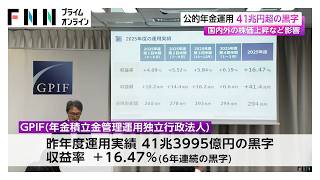
Japan's Government Pension Investment Fund said its investment operations for fiscal 2025 generated a surplus of more than 41 trillion yen, lifted by gains in domestic and overseas stock markets.

Gold prices remain under pressure after spot bullion briefly fell below 4,000 dollars per troy ounce last week, marking the lowest level in seven months since early November, as investors reassess the outlook for US interest rates and the dollar.

Workers inspecting screws are a familiar sight in Tokyo’s Ota Ward, where small factories line the streets, but manufacturers say rising costs are squeezing operations despite signs of strength elsewhere in the economy.

Business expansion creates pressure on finance teams before it creates visible growth.

Tokyo stocks staged a sharp intraday reversal on July 3, with the Nikkei 225 rebounding from an early drop of more than 1,100 points to close more than 1,000 points higher as investors bought back semiconductor and AI-related shares while rotating into lagging value stocks.

Japan’s long-term interest rate, which affects fixed-rate housing loans and other borrowing costs, climbed to its highest level in about 30 years as concerns grew over the fiscal outlook under the Takaichi administration.