TOKYO - Prime Minister Sanae Takaichi’s economic agenda came under sharper pressure on July 22 as the yen fell to its weakest level in about 40 years, forcing the government to warn of possible currency action while the Bank of Japan signaled growing concern that inflation risks could require faster interest-rate hikes.
The yen’s slide beyond 163 to the dollar has turned currency policy into the most urgent political issue facing the administration. Finance Minister Satsuki Katayama said the government was ready to take decisive action against excessive foreign-exchange moves if necessary, while Chief Cabinet Secretary Minoru Kihara said authorities were prepared to respond at any time.
The warnings reflect concern that yen weakness is no longer just a market issue. A weaker currency raises import costs for food, energy and raw materials, directly affecting households and small businesses. It also threatens to undermine Takaichi’s argument that her growth strategy will improve living standards through investment, wages and industrial renewal.
The problem for the government is that verbal intervention may not be enough. Japan has already intervened in the currency market several times in recent years, but the yen remains under pressure because of the interest-rate gap with the United States, higher energy prices, geopolitical risk and investor doubts over Japan’s fiscal and monetary policy mix.
The Bank of Japan is now at the center of that debate. BOJ officials are increasingly alert to price risks that could require faster rate hikes than markets currently expect. Policymakers are concerned that the weak yen, higher energy costs and stronger corporate pricing behavior could push inflation above expectations.
The central bank raised its policy rate to 1% in June, the highest level in more than three decades, and is widely expected to keep rates unchanged at its July 30-31 meeting. But the tone of the meeting could be more important than the decision itself. If the BOJ signals that it is prepared to raise rates faster, it could support the yen but increase borrowing costs for the government, households and companies.
That creates a difficult political triangle for Takaichi. The government wants the BOJ to avoid damaging growth, investors want reassurance that monetary policy remains independent, and households want relief from rising prices. The weaker the yen becomes, the harder it is for the administration to keep all three audiences satisfied.
The currency pressure also exposes the vulnerability of Takaichi’s new economic roadmap. The plan calls for more than 370 trillion yen in public and private investment through fiscal 2040, targeting strategic sectors such as artificial intelligence, semiconductors, shipbuilding, energy, space, quantum technology and advanced manufacturing. The government says the plan can lift Japan’s growth potential and strengthen economic security.
But the roadmap has drawn criticism for lacking detail on how the investment will be generated, how projects will be selected and how fiscal discipline will be maintained. Critics argue that the plan risks becoming a large-scale spending slogan unless it is backed by clear incentives, credible financing and measurable targets.
Bond markets are already reflecting that concern. Japanese government bond yields have risen to multi-decade highs as investors question whether the administration can expand investment, manage debt and avoid pressuring the BOJ. If yields keep rising, the cost of financing government policy will increase, making it harder for Takaichi to present her program as both pro-growth and responsible.
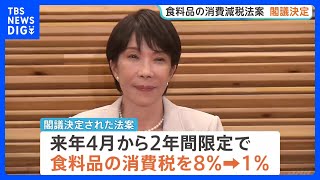
The food consumption tax debate added another domestic pressure point. Opposition parties rejected the ruling bloc’s proposal for a temporary cut to the 8% consumption tax rate on food, arguing that the plan would amount to a tax increase after two years and calling instead for early cash benefits to help households cope with inflation.
The Takaichi administration wants to reach a conclusion on the food-tax proposal by early August, with the possibility of submitting related legislation to an extraordinary Diet session in the autumn. The issue is politically sensitive because food prices are one of the clearest ways voters experience inflation.
A temporary food-tax cut could give the government a visible cost-of-living measure, but it would also raise questions over lost revenue, administrative complexity and how to end the cut without provoking a backlash. Cash benefits could be faster to deliver, but they may be criticized as temporary handouts that do not address structural price pressures.
The debate is likely to become one of the main opposition lines against Takaichi. The government wants to talk about long-term investment and strategic industries, while opposition parties are trying to force the conversation back to household budgets. With the yen weakening and food prices still under pressure, the opposition has a clear opening.
Constitutional politics also moved forward on July 22. A House of Councillors committee approved a bill to ease requirements for appointing poll watchers under the law governing national referendums for constitutional amendments. The bill concerns the technical rules for running a referendum, but it matters politically because any change to referendum procedures is tied to Japan’s long-running debate over constitutional revision.
For the LDP and conservative lawmakers, referendum reform is part of the infrastructure needed before any future constitutional amendment can realistically be put to voters. For opposition parties, even procedural changes can raise concern if they are seen as clearing the path for a broader constitutional revision agenda.
The issue is not likely to dominate public attention in the same way as the yen or food prices, but it fits Takaichi’s wider political identity. Her administration has already prioritized conservative institutional issues, including the revised Imperial House Law, and referendum reform keeps constitutional politics alive even as the government focuses publicly on the economy.
The extended Diet session, now scheduled to run until July 25, gives the ruling bloc only a few more days to manage remaining legislation and coalition expectations. The Japan Innovation Party is still looking for visible progress on reform-oriented items, including the secondary-capital agenda, after the ruling camp gave up on passing Lower House seat-reduction legislation during the current session.
That coalition balance remains important. Takaichi’s LDP has secured a conservative achievement through the Imperial House revision, but Ishin needs proof that the partnership can also deliver on decentralization and administrative reform. If the final days of the session produce little movement on Ishin priorities, coalition frustration could carry into the autumn political calendar.
The July 22 political picture shows the Takaichi administration being pulled back from long-term strategy into immediate crisis management. The government wants to define itself through investment, economic security and institutional reform. But the yen’s fall, inflation pressure, the BOJ’s next move and the household-relief debate are forcing the administration to defend its credibility in real time.
The central question is whether Takaichi can keep her growth agenda from being overwhelmed by market anxiety. If the government can stabilize the yen, reassure bond investors and produce a convincing household-relief package, the 370 trillion yen roadmap may remain the core of her political message. If not, the plan could be remembered less as a growth strategy than as the moment markets began testing the administration’s limits.
What To Watch Next
The yen will remain the most immediate political and market risk. Any further fall beyond recent lows could increase pressure on the Finance Ministry to intervene.
The BOJ’s July 30-31 policy meeting is now a major test of whether the central bank signals faster rate hikes in response to yen-driven inflation pressure.
The government’s decision on whether to cut the 8% consumption tax rate on food is expected by early August and could become the main household-relief issue heading into autumn.
Opposition parties are likely to keep pressing for cash benefits instead of a temporary food-tax cut, framing the ruling bloc’s proposal as delayed and insufficient.
The referendum reform bill should be watched as part of the broader constitutional revision debate, even if the immediate changes are procedural.
The extended Diet session ends on July 25, leaving little time for the ruling bloc to advance Ishin-backed reform items and manage coalition expectations.
Bond yields remain a key constraint on Takaichi’s growth roadmap, especially if investors continue to question fiscal discipline and BOJ independence.