News On Japan

Japan becomes first in Asia to get Starlink connection

TOKYO - Japan on Tuesday became the first country in Asia to receive Internet access from the Starlink satellite system from the SpaceX company controlled by Tesla founder Elon Musk.

Starlink is led by SpaceX, which envisions the system as part of a constellation of satellites that would deliver broadband Internet across the globe.

A service map from Starlink shows most of central and northern Japan is now covered by the technology, including Tokyo. The rest of the country could see full coverage by the fourth quarter. South Korea, to Japan's west, is expected to get service early next year, the Bloomberg news agency reported.

SpaceX broke its annual record with the completion of its 32nd successful launch in 2022 after sending 46 of its Starlink satellites to orbit in July. It completed 31 successful launches in all of 2021. ...continue reading

News On Japan
POPULAR NEWS

Typhoon No. 26 (Surigae) is forecast to intensify into a strong typhoon with a storm-force wind zone as it approaches waters south of Okinawa around September 26, raising concerns over severe weather in the region and the possibility of further heavy rainfall across mainland Japan next week as a stationary autumn rain front remains over Honshu.

A major traffic accident involving 10 vehicles, including trucks and passenger cars, left one man seriously injured and nine others with minor injuries on the Daini Shinmei Road in Kobe on September 24, forcing the closure of part of the expressway.

Japan celebrated two landmark performances on Day 6 of the Aichi-Nagoya Asian Games on September 24, with the men's table tennis team defeating China 3-2 to claim its first gold medal in 60 years and 17-year-old swimmer Shin Ohashi breaking the men's 200-meter breaststroke world record.

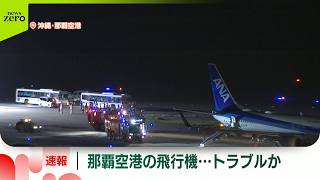
An All Nippon Airways (ANA) flight bound for Saga Airport made an emergency landing at Naha Airport in Okinawa at 10:05 p.m. on September 23 after developing trouble with its right engine shortly after takeoff, with some passengers suffering minor injuries during an emergency evacuation.

Japan's Asian Games campaign produced another day of records and medals on September 23, with Shoon Mitsunaga setting a national record to win the men's 100-meter butterfly, both Japanese gymnastics teams taking silver behind China, and Toshikazu Yamanishi adding to the host nation's athletics medal haul.

MEDIA CHANNELS
         

MORE Sci-Tech NEWS

A rare pod of around 50 dolphins was spotted swimming through the Seto Inland Sea off Ozu, Ehime Prefecture, with dozens of dorsal fins repeatedly breaking the surface as the animals moved together.

Tesla unveiled its Cybercab in Japan for the first time on September 11, showcasing an AI-powered autonomous taxi designed without a steering wheel or pedals.

Large volumes of floodwater poured into the Metropolitan Area Outer Underground Discharge Channel in Kasukabe, Saitama Prefecture, following heavy rain on September 7, prompting the massive underground flood-control facility known as the "Underground Temple" to go into operation.

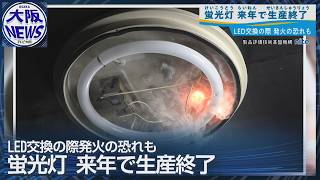
Fluorescent lamps that have illuminated Japanese homes and workplaces for decades are approaching the end of production, with Panasonic preparing to wind down a business it has operated since 1951 while experts warn that incorrectly replacing some fixtures with LEDs could create a fire risk.

Osaka-based spray nozzle maker IKEUCHI is expanding applications for its proprietary "Dry Fog," an ultra-fine mist that can cool, humidify and create visual effects without leaving surfaces wet, with the technology now being used in factories, livestock farming, crop cultivation and tourist attractions in Japan and overseas.

Japanese companies are moving closer to commercializing photonics-electronics convergence technology that replaces part of conventional electrical data transmission with optical signals, potentially allowing huge volumes of data to move with lower latency while sharply reducing power consumption as artificial intelligence drives rapid growth in electricity demand from data centers.

A new generation of optoelectronic integration technology developed over four decades by Japanese companies is moving closer to commercialization, offering a way to transmit huge volumes of data with low latency while sharply reducing the electricity consumed by data centers as artificial intelligence drives explosive growth in computing demand.

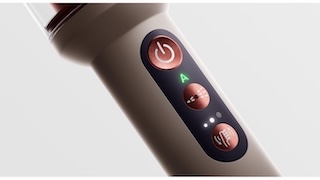
Dyson CameraJet™ turns the smart toothbrush into an active sensing product, making useful feedback and clear privacy design part of the same engineering brief.