News On Japan

Experts predict bed bugs will spread in Japan

TOKYO - As international travel returns to pre-pandemic levels, the global proliferation of bed bugs is raising concerns in Japan, where experts are now warning of an unavoidable spread of these blood-sucking insects.

In South Korea, a "four-week epidemic prevention period" began on Nov 13, with hotels in Seoul popular among Japanese tourists reassuring guests by displaying city-certified stickers.

Bedbugs, not to be confused with lice, are a type of stink bug, about 5mm in length. They hide in places like gaps in beds and sofas during the day and become active at night, feeding on human blood. Bites can cause intense itching, making it difficult to sleep.

Bedbugs are now a global problem. In France, ahead of the Olympics, a massive outbreak was confirmed in homes and lodging facilities around September. Sightings in public transport also increased, causing widespread anxiety.

A pest control expert suggests, "During overseas travel, it's advisable to bring along extra plastic bags to store your garments as soon as you remove them. Rather than bringing these clothes straight home, first head to a laundromat and use the dryer to prevent infestations."

Bedbugs are known to be vulnerable to cold, but experts warn not to let your guard down even in winter.

Dr. Yuu Natsuaki of Hyogo Medical University Hospital warns, "With so many people entering from abroad or traveling domestically, I predict that if this situation continues, bedbugs will spread and become a serious issue throughout Japan. They remain active in warm environments, so in constantly air-conditioned comfortable settings, they can reproduce any time, regardless of winter or summer."

According to Dr. Natsuaki, bedbugs have specific hiding places. They feed on the blood of sleeping people at night, often lurking around beds, specifically in bed gaps and on hanging clothes. Also, beware of the underside of carpets and gaps in sofas.

However, checking the back of all furniture is challenging. One key sign to look out for is the black spot-like feces known as blood feces. If you find these behind books, it might indicate bedbugs. Also, check behind wall posters, and in pockets and folds of bags.

Ichiro Takahashi, Director of the Japan Tourism Agency stated, "If there are requests from relevant ministries, we will consider issuing warnings through the travel industry and related organizations."

News On Japan
POPULAR NEWS

A clinic director and a former Peruvian staff member have been referred to prosecutors after the man allegedly performed medical procedures without a license, including an external cephalic version—a procedure used to manually turn a baby into the correct position before birth—at an obstetrics and gynecology clinic in Fukuoka City, raising concerns about patient safety and oversight in maternity care.

The family of James "Weston" Higginbotham, a 20-year-old Auburn University student who disappeared during a family vacation in Japan, announced on June 7th that he has been found dead after a volunteer search-and-rescue group located his body in a mountainous area outside Kyoto, bringing a week-long multinational search to a tragic end.

Japan's Meteorological Agency announced on June 7th that the rainy season is believed to have begun in the Tokai and Kanto-Koshin regions, marking the seasonal shift to wetter weather across a broad area of the country.

Expectations for Japan are unusually high heading into the 2026 World Cup, with the team now aiming not merely to reach the knockout stage but to finally break through the Round of 16 and advance to the quarterfinals for the first time.

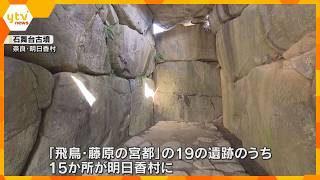
Residents in Nara Prefecture are celebrating after UNESCO's advisory body recommended the archaeological complex known as the Asuka-Fujiwara Ancient Capitals for inscription as a World Heritage site, bringing the historic birthplace of Japan's ancient state one step closer to international recognition.

MEDIA CHANNELS
         

MORE Travel NEWS

Yakushima, a world natural heritage island in Kagoshima Prefecture, is marking 60 years since the discovery of Jomon Sugi, the island's iconic cedar tree estimated to be more than 2,000 years old, as concerns grow over the future of the ancient forests that have long supported both tourism and local life.

Residents in Nara Prefecture are celebrating after UNESCO's advisory body recommended the archaeological complex known as the Asuka-Fujiwara Ancient Capitals for inscription as a World Heritage site, bringing the historic birthplace of Japan's ancient state one step closer to international recognition.

Japan could face a more active typhoon season than usual in 2026, with private weather forecaster Weathernews predicting around 28 typhoons to form during the year—above the long-term average of 25.1—and warning that approximately 14 could approach Japan, increasing the risk of weather-related disruptions across the country.

Tourists are once again taking to the waters of the Kitayama River along the borders of Wakayama, Mie, and Nara prefectures, where a popular traditional rafting experience recreates the historic practice of transporting mountain timber by raft from Kitayama Village downstream to Shingu City.

A newly formed tropical depression in the South China Sea could bring another round of heavy rain to western Japan as it interacts with the seasonal rain front, meteorologists have warned, only days after Typhoon Jangmi (Typhoon No. 6) caused widespread damage across the country.

A bear that injured four people in Fukushima City escaped despite efforts to capture it using tranquilizer darts and box traps, prompting authorities to urge residents to remain on high alert.

Typhoon Jangmi (Typhoon No. 6) swept across Japan on June 3rd, bringing record-breaking rainfall, widespread flooding, landslides, transport disruptions, and powerful winds, while prompting Tokyo's first-ever issuance of a Level 4 danger alert under the country's new weather warning system.

A section of wall plaster and part of a roof eave were found damaged at Himeji Castle, the UNESCO World Heritage site in Hyogo Prefecture, on June 4th, with officials investigating whether strong winds from Typhoon Jangmi (Typhoon No. 6) were responsible.