News On Japan

Squid-flation bites Japan as catch sinks to new low

Apr 11, 2018 (Nikkei) - Japan's catch of Pacific flying squid fell to a new all-time low in 2017, sending wholesale prices of the seafood to profit-squeezing highs for companies that process it into popular foods.

Often eaten as surume, a kind of fish jerky, flying squid is one of several kinds of seafood that have become scarce in recent years.

Last year's haul sank 15% to 53,000 tons, according to the JF Zengyoren national federation of fishing cooperatives. The squid catch has fallen by half in just two years. The previous low was plumbed in 2016.

Lighter catches have been blamed on changing sea temperatures, which impedes the spawning and growth of the squid. Critics have also pointed to overfishing by North Korean and Chinese fishing boats.

Wholesale prices of flying squid have climbed as a result. Last year's average price per kilogram came to 564 yen, a roughly 80% increase from two years earlier, according to JF Zengyoren.

Flying squid is often dried to make "surume," a squid jerky. (Photo by Tatsuya Inoue)

At Tokyo's Tsukiji fish market, flying squid fetched around 950 yen during the first week of April. Although that price is about 20% lower than the comparable week last year, it is nearly 10% higher than in 2015 and 2016.

Besides being dried, flying squid is stuffed with rice to make ikameshi, and its innards are fermented into shiokara, a pungent topping for rice.

Rising wholesale prices are hitting squid processors in the wallet. Procurement costs for those companies have doubled in five years, said Hideki Tonami, director of the National Cooperative Association of Squid Processors, calling the business environment "the toughest it has ever been."

News On Japan
POPULAR NEWS

Typhoon No. 30 was moving north through the East China Sea at 30 kilometers per hour at 6 p.m. on October 24, according to the Japan Meteorological Agency, as the large storm continued to weaken while approaching Kyushu, raising concerns about heavy rainfall across western and eastern Japan through October 26.

Typhoon No. 30 is raising the risk of widespread transport disruption across Japan on Sunday, October 25, particularly from the afternoon into the evening, as heavy rain and strong winds threaten airline schedules, railway services and major expressways. The most serious disruption is forecast from Sunday night through Monday morning, when the typhoon is expected to approach Kyushu and intensify an autumn rain front extending across western and eastern Japan.

Japanese drone manufacturer Terra Drone has delivered interceptor drones to Ukraine's Ministry of Defense for the first time, prompting Russia to threaten retaliatory measures on October 21, as Japan considers expanding domestic drone production and strengthening its coastal defenses through thousands of unmanned aircraft.

A critical security flaw discovered in PHP, a programming language used by an estimated 70% of the world's web systems, has triggered widespread disruptions across Japan since October 21, forcing banks, restaurant chains, government agencies and other businesses to suspend online services as a precaution against potential cyberattacks.

A growing wave of cyberattacks across Japan has raised concerns over the possible use of Chinese-developed artificial intelligence in hacking operations, with personal information belonging to tens of thousands of police employees potentially exposed and major companies forced to suspend online services, while cybersecurity experts warn that slow decision-making within Japanese organizations is allowing damage to spread.

MEDIA CHANNELS
         

MORE Society NEWS

A fire broke out at a warehouse believed to belong to Kurosawa Film Studio in Yokohama, Kanagawa Prefecture, shortly after midnight on October 23, prompting the dispatch of 40 emergency vehicles after a report that a battery was burning, with witnesses describing explosion-like sounds and vibrations strong enough to shake nearby windows.

Four dead fawns with missing body parts have been discovered around Kofukuji and Todaiji temples in Nara between August and October, prompting Nara Prefecture to hold an emergency press conference on October 23 after experts determined that wild animals were unlikely to have caused the injuries, raising suspicions that humans may have deliberately harmed the young deer.

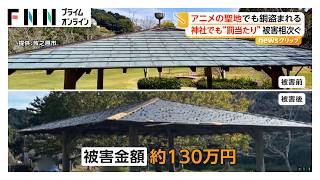
A wave of copper thefts has struck public facilities across Japan, with thieves stripping metal from bridges, park shelters and shrines, including a park known as a popular anime pilgrimage site, while police in Nagano Prefecture have made arrests following a series of similar incidents.

Police in Kochi Prefecture have released footage of a group of teenagers riding motorcycles recklessly through Kochi City on January 1st, 2026, in a New Year's Day incident known as a "first sunrise motorcycle rampage," with 18 people aged between 15 and 19 arrested or referred to prosecutors for suspected violations of the Road Traffic Act.

Empress Emerita Michiko celebrated her 92nd birthday on October 20th, receiving birthday greetings from Emperor Naruhito, Empress Masako and other members of Japan's imperial family at her residence in Tokyo, as concerns grow over her declining physical strength and signs of fatigue.

The deputy mayor of Saijo City in Ehime Prefecture died after being crushed beneath a festival float weighing approximately 3 tons while participating in a traditional autumn festival on October 17.

Princess Aiko, the only daughter of Emperor Naruhito and Empress Masako, arrived in Tottori Prefecture on October 19 for her first visit to the region, where she is scheduled to attend a national disaster prevention conference and a symposium on disaster preparedness.

Police in Gunma Prefecture rearrested a 30-year-old man on October 18 on suspicion of murdering his former mother-in-law at her home in Ota City last month, following an attack that also left the woman's eldest son injured.