News On Japan

Proposal to Increase Teachers' Salaries by Over 10%

TOKYO, Apr 19 (News On Japan) - The Special Committee of the Central Council for Education, which focuses on salary systems and work style reforms for teachers, has proposed a draft to significantly increase the additional pay for teachers.
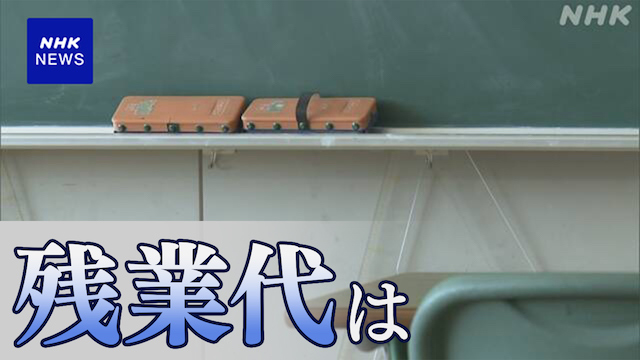
This pay, meant to compensate for overtime, is suggested to rise from the current 4% of monthly salary to at least 10%. This adjustment, the first of its kind in fifty years, maintains the existing system where overtime compensation does not correspond to actual hours worked.

As teacher shortages persist and work hours lengthen, the committee, under the Ministry of Education, Culture, Sports, Science and Technology, has been exploring these reforms since last June. On the 19th, they presented their proposal which addresses the payment structure set by the "Special Law on Salaries" (Kyutokuho) over fifty years ago. This law was initially based on an assumption of roughly 8 hours of overtime per month.

The proposed increase to 10% would, according to the Ministry's calculations, boost a 32-year-old teacher's monthly earnings from approximately 12,000 yen to about 30,000 yen on a base salary of 300,000 yen. To implement this change, an amendment to the Kyutokuho is required, potentially increasing public spending by 210 billion yen.

Despite the proposed pay raise, there remains criticism over the Kyutokuho framework itself, which does not calculate overtime based on actual hours worked. The draft defends this approach by highlighting the unique and spontaneous nature of teaching, which often involves creativity and cannot easily be confined within strict working hours.

Furthermore, the proposal introduces several enhancements to the teaching framework:

  • The establishment of an intermediary role between "teacher" and "senior teacher" offering higher pay.
  • Additional allowances for homeroom teachers and improvements in management allowances.
  • Expansion of the specialized subject teacher system from 5th and 6th grades to include 3rd and 4th grades.
  • Increased deployment of support staff to better assist teachers and manage student needs.

The committee aims to finalize its discussions by May, addressing both the urgent need for better compensation and the broader reform of work conditions in education.

Source: NHK

News On Japan
POPULAR NEWS

The Ministry of Land, Infrastructure, Transport and Tourism has announced plans to draw up guidelines for the introduction of a so-called dual pricing system that differentiates between foreign visitors and local residents.

Kyoto City significantly raised its lodging tax from March 1st, increasing the maximum charge per person per night from 1,000 yen to as much as 10,000 yen, in a move aimed at tackling overtourism and funding the preservation of cultural assets, even as questions remain about its impact on visitors and the local economy.

A former emergency responder and foreign tourists worked together to rescue a woman in her 80s who was trapped inside an overturned light vehicle in Hakuba Village, Nagano Prefecture.

Tokyo Metro and Toshiba have launched Japan’s first demonstration test allowing passengers to pass through ticket gates without touching them by using their smartphones’ Bluetooth function.

The admission fee for the World Heritage-listed Himeji Castle in Himeji, Hyogo Prefecture, was revised on March 1st for the first time in 11 years, introducing a dual pricing system that significantly raises costs for visitors from outside the city.

MEDIA CHANNELS
         

MORE Education NEWS

During the first half of the twentieth century, the expansion of the Japanese Empire across Asia turned war into a landscape of systematic violence against civilian populations. (TRNGL)

With company information sessions for university students set to graduate next spring opening in March, Japan’s job-hunting season has entered full swing, once again unfolding under what is widely seen as a candidate-driven seller’s market.

Murai Masayoshi, known professionally as Muramasa and described as a Reiwa-era ukiyo-e artist, has drawn attention for his distinctive “ukiyo-e-style portraits” that depict contemporary figures in the manner of Japan’s Edo period.

In the Keihoku district on the northern edge of Kyoto City, a free school operating out of a former elementary school has become a sanctuary for children who struggle to attend regular classes, offering not only a second chance at learning but also a place of emotional safety for both students and their parents.

A proposed ordinance in Otsu, western Japan, that would effectively lower salaries for public kindergarten teachers by aligning them with the lower pay scale of nursery staff has drawn strong backlash, with a citizens’ group submitting more than 8,000 signatures to the Otsu City Council chair on February 26th calling for a review of the plan.

The financial burden of Japan’s competitive junior high school entrance exams is coming under renewed scrutiny, with a popular manga series offering a lens through which to examine whether the process delivers value for families willing to spend heavily in pursuit of academic success.

In recent years, awareness of reproductive health has expanded significantly across Japan.

In this professional critique, I demonstrate how subtle changes in shadow, color temperature, and value contrast can transform flat shapes into convincing three-dimensional form. (Watercolor by Shibasaki)