News On Japan

Japan Mulls Vouchers to Ease High Food Prices

TOKYO - The government is moving to include the use of “okome-ken,” or rice vouchers, in its upcoming package of economic measures. The vouchers can be used to purchase rice and other food items and have already been distributed by several municipalities as part of local initiatives to offset rising living costs.

Taking these cases into account, the government is considering expanding the use of rice vouchers as a way to address persistently high rice prices. The plan involves increasing the “Priority Support Local Grant,” a subsidy that allows municipalities to allocate funds at their discretion, and designating rice voucher programs as a government-recommended initiative. However, concerns have been raised over the administrative and mailing costs associated with implementing the scheme.

Meanwhile, a survey conducted in October showed that the index for the three-month outlook on rice prices fell to 39, below the key threshold of 50, indicating expectations of a decline. As the distribution of newly harvested rice accelerates, sentiment is growing that prices will continue to ease in the months ahead.

News On Japan
POPULAR NEWS

Typhoon No. 15 (Chan-hom) began causing significant disruption to Japan's Obon holiday travel on August 11, with ANA canceling 58 flights serving Haneda and Narita airports, JAL canceling four flights, and JR East suspending some services on the Joban Line as the storm approached eastern Japan.

Typhoon No. 15 (Chan-hom) is expected to make landfall near Ibaraki Prefecture between around 6 p.m. and 9 p.m. on August 11, bringing rapidly strengthening winds, high waves and heavy rain to parts of Kanto and southern Tohoku, with unsettled weather potentially continuing even after the storm moves inland.

Japan's H3 Rocket No. 9 successfully placed the Michibiki No. 7 navigation satellite into its planned orbit after lifting off from the Tanegashima Space Center in Kagoshima Prefecture at 4:23 a.m. on August 11, marking the country's second consecutive successful H3 launch.

The Tokaido Shinkansen operated its first overnight service ahead of the Obon holiday period, offering travelers a 15,000 yen trip from the Tokyo area to Kyoto and Shin-Osaka while allowing them to save on hotel costs and arrive earlier than the first regular morning trains.

Typhoon No. 15 is expected to approach and likely make landfall somewhere in the Kanto region on August 11, bringing strong winds and heavy rain that could disrupt conventional rail services, expressways and flights while also affecting a wider area extending into Tohoku.

MEDIA CHANNELS
         

MORE Politics NEWS

Prime Minister Takaichi said on August 10 that the government expects to apply the Disaster Victims' Livelihood Recovery Support Act across all of Kumamoto Prefecture, allowing households whose homes were completely destroyed in the Kumamoto earthquake to receive up to 3 million yen in assistance.

Nagasaki marked the 81st anniversary of the U.S. atomic bombing on August 9 with a memorial ceremony near the hypocenter, where Mayor Shiro Suzuki declared nuclear weapons an "absolute evil" and called on the Japanese government to uphold its Three Non-Nuclear Principles.

Prime Minister Sanae Takaichi’s economic strategy faced renewed pressure on August 7 as attention shifted toward the Bank of Japan’s September policy meeting, with central bank officials preparing a series of public appearances that could signal whether another interest-rate hike is becoming likely after recent yen turmoil and fiscal concerns.

Hiroshima marked the 81st anniversary of the atomic bombing on August 6 with a peace memorial ceremony at Peace Memorial Park, where Mayor Kazumi Matsui warned of the growing danger that nuclear weapons could be used and called for renewed action toward their abolition.

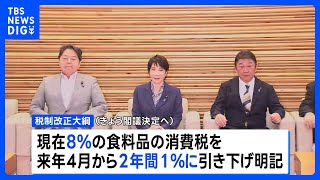
Prime Minister Sanae Takaichi’s government formally approved a plan on August 5 to reduce the consumption tax rate on food and nonalcoholic beverages from 8% to 1% for two years beginning in April 2027, setting the stage for a difficult parliamentary battle over how to cover an estimated 10 trillion yen revenue shortfall and whether the politically sensitive tax can be restored afterward.

Japan’s latest defense white paper has sparked controversy by presenting the country’s expanding military buildup not only as a national security necessity but also as a potential engine of economic growth, drawing criticism from China and raising fresh domestic questions over how far Prime Minister Sanae Takaichi’s government is prepared to link defense, industry and fiscal policy.

Prime Minister Sanae Takaichi’s food-tax cut plan cleared a major ruling party hurdle on August 5, intensifying debate over whether her government can deliver household relief without weakening fiscal credibility or drawing the Bank of Japan deeper into the administration’s economic agenda.

Ukrainian President Volodymyr Zelenskyy instructed diplomatic officials on August 3 to strengthen relations with Japan, expressing disappointment with the results achieved so far and raising speculation that Kyiv is seeking Japanese weapons supplies.