News On Japan

Why Japanese Women Don’t Want to Marry Anymore

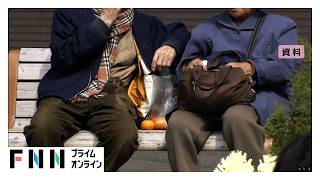
Mar 08, 2026 (Japanese Comedian Meshida) - Right now in Japan, more women say they do not want to get married. In 1980, the unmarried rate for women was about 4%, meaning most women eventually married. Today it is about 23%, or roughly one in four women.

Many single women say they do not want to marry. But if a man appeared who was handsome, had a high income, was kind, and was willing to help with housework and childcare—the so-called ideal man—they would probably say, "Actually, I do want to get married." In other words, they do have a desire to marry. The problem is that they cannot find a suitable partner. It is not that they do not want marriage; they simply do not want to compromise.

In Japan, a survey that circulated on social media found that 72% of women said they would rather remain single than marry a "weak man" or someone they see as having lower status than themselves. Interestingly, Japan is often described as male-dominated, yet the language used can be revealing: a low-income single woman is simply called a woman, while a low-income single man is often labeled a "weak man."

In the past, opportunities to meet potential partners were limited, so people nearby often seemed more appealing. After marriage, many couples realized the attraction had been based on a misunderstanding. Today, however, dating apps provide far more opportunities to meet people, allowing users to compare many potential partners. As a result, more people think the next person might be better, leading more women to say, "I don't want to get married if I have to compromise."

Source: Japanese Comedian Meshida

News On Japan
POPULAR NEWS

Record rainfall caused 19 rivers to overflow across Fukui Prefecture, flooding roads and homes, triggering landslides and temporarily forcing authorities to issue the highest-level heavy rain emergency warning from early Sunday morning.

Drones were used to deliver food and daily necessities to an isolated mountain community in Himi City, Toyama Prefecture, on August 30 after torrential rain triggered a landslide that cut off road access, while volunteers continued flood recovery work in neighboring Ishikawa Prefecture.

Two typhoons east of Japan were moving northward on August 30, with Typhoon No. 23 (Banlan) overtaking Typhoon No. 22 (Artau), although neither storm is expected to have a direct impact on Japan.

A 9-minute, 13-second drone video filmed inside Aeon Mall Kumamoto two days after the deadly explosion has provided a detailed view of the destruction, showing collapsed ceilings, heavy dust and widespread damage that may have affected between one-third and nearly half of the shopping center.

Strong Typhoon No. 18 was moving northwest through the East China Sea on the night of August 26, gradually pulling away from Okinawa and the Amami Islands as lingering rain, strong winds and high waves were expected to ease. As of 9 p.m. on August 26, the typhoon was over waters north-northwest of Kume Island and moving northwest.

MEDIA CHANNELS
         

MORE Society NEWS

Three teenage boys who went missing after being swept offshore from the coast of Ichikikushikino, Kagoshima Prefecture, on August 28 were found in the sea near the scene on August 29 and confirmed dead.

A foreign man in his 30s suffered serious injuries after being struck by a car while riding a bicycle in Higashiomi, Shiga Prefecture, early on August 29, with police investigating the incident as a hit-and-run.

A fake video apparently created with generative AI showing a large bear eating piles of sliced bread has spread on social media following a series of illegal bread dumping incidents in Tottori Prefecture, prompting the prefectural government to warn that misinformation could cause economic harm.

Three youths, including a high school student and a junior high school student, have been arrested on suspicion of obstructing police duties after allegedly stealing fire extinguishers and spraying them toward a police station in Kasugai, Aichi Prefecture.

Yayoi Kusama, the Japanese avant-garde artist whose obsessive dots, nets, pumpkins and mirrored rooms grew from intensely personal visions into some of the most recognizable images in contemporary art, died at a hospital in Tokyo on August 14, 2026, at the age of 97. Her death was announced on August 27 by companies representing the artist, which said she continued painting until her final days.

A Toei bus crashed into a traffic signal in Tokyo's Edogawa Ward on the morning of August 26 after the driver lost control of the steering wheel while trying to shoo away a mosquito, leaving two male passengers injured.

Kanazawa's fire department is asking residents not to straighten or rearrange shoes removed by paramedics during emergency calls, warning that the well-intentioned gesture can delay the transport of patients by around 30 seconds and potentially interfere with medical care.

Two men who stole four luxury watches worth a combined 200 million yen from a store at Tokyo's Nakano Broadway may have carefully planned the 10-second theft, with one suspect renting an electric kick scooter shortly before the crime and investigators examining whether the other man's escape on foot was intended as a decoy.