News On Japan

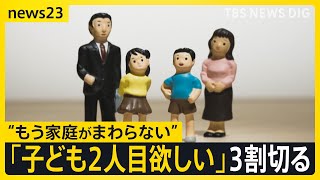
Number of Children in Japan Falls for 45th Straight Year

TOKYO - The number of children in Japan continued its long-term decline, with those aged 15 and under falling by 350,000 from a year earlier to a record low of 13.29 million as of May 4th, just ahead of Children’s Day, according to data released by the Ministry of Internal Affairs and Communications.

The decline marks the 45th consecutive year of decrease, underscoring the country’s deepening demographic challenges as birth rates remain low.

Children now account for just 10.8% of Japan’s total population, a figure that ranks as the second lowest among 38 countries with populations exceeding 40 million, placing Japan just above South Korea.

The data highlights the continued shrinking of Japan’s younger population, raising concerns over the long-term sustainability of the workforce and social security systems in the years ahead.

Source: テレ東BIZ

News On Japan
POPULAR NEWS

Eleven pupils and teachers were injured after a fire broke out at Takinogawa Daisan Elementary School in Tokyo's Kita Ward at around 11 a.m. on June 19, forcing more than 300 children to evacuate and briefly trapping several pupils on a narrow ledge outside a fourth-floor classroom.

Heavy rain is expected across a wide area of Japan this weekend, with western Japan facing cloudy and rainy conditions on June 19 and Kyushu likely to see torrential rain and thunderstorms before rain clouds move eastward toward eastern Japan and Tohoku through June 21.

The eruption alert level for Mount Tokachidake in Hokkaido was raised to Level 2 on June 18 for the first time in 12 years, prompting authorities to restrict entry within 1.5 kilometers of the crater and close parts of hiking trails just days before the mountain’s official opening for the summer climbing season.

Bear attacks and sightings are increasing across Japan, with multiple people injured on June 17 and experts warning that bears are becoming more accustomed to human environments, potentially leading to more dangerous and unpredictable encounters in the years ahead.

JR Central and JR West on June 17 announced pricing and service details for the new private-room seating that will be introduced on the Tokaido and Sanyo Shinkansen from October, creating a new top-tier class above the existing Green Car service.

MEDIA CHANNELS
         

MORE Education NEWS

A certification exam testing knowledge and skills related to ninjas was held in Koka, Shiga Prefecture, a city known as one of Japan's historic ninja centers.

The Tokyo Fire Department has called for greater public cooperation with emergency medical services following a rise in incidents involving interference with ambulance crews, including cases in which paramedics have been assaulted while carrying out rescue operations.

The University of Tokyo and TOPPAN Holdings announced the establishment of the AI Innovation Research Center, a new initiative aimed at advancing research and development for the practical application of artificial intelligence in society.

As bear sightings continue at an unusually high pace across Akita Prefecture, a veteran wildlife photographer who has spent nearly 30 years observing and photographing Asian black bears says the animals are appearing more frequently, moving closer to human settlements, and increasingly adapting their behavior to survive.

The Blue Angels, the cheerleading squad of Joto High School's support and cheering club, are winning over audiences with their sparkling smiles and dynamic performances.

A group of university students in Okinawa is working to combat menstrual poverty and improve understanding of menstruation through educational programs aimed at both children and adults, addressing a problem that affects roughly one in three young women in Japan.

Japan, which records the shortest average sleep duration among OECD countries, is launching new efforts to tackle widespread sleep deprivation, including the opening of specialized sleep disorder departments and programs aimed at improving children's sleep habits through sports and physical activity.

Birthrates in neighboring Kyoto and Shiga prefectures have moved in opposite directions, with experts pointing to housing costs, commuting convenience, and stable employment as key factors shaping where young families choose to live.