News On Japan

Japan Set to Secure 100% Alternative Crude Oil Supply by July

TOKYO - Japan is expected to achieve a 100% alternative crude oil procurement rate by July, following government efforts to diversify import sources in response to the effective closure of the Strait of Hormuz, government officials said.

The government has expanded crude oil procurement beyond the Middle East, increasing imports from the United States, Central and South America, Central Asia, and other regions.

Japan had previously relied on the Strait of Hormuz for more than 90% of its crude oil imports. However, according to government officials, diversification measures have progressed to the point where all crude oil imports can be sourced through routes that do not pass through the strait beginning next month.

The government also expects that by utilizing national petroleum stockpiles, it will be able to maintain a stable supply of oil through the end of March 2028.

Prime Minister Sanae Takaichi is scheduled to report the latest situation at a meeting of relevant ministers on Middle East affairs later on June 11.

In addition, ahead of the G7 summit in France next week, Takaichi is coordinating proposals aimed at stabilizing global crude oil markets. The proposals are expected to include opposition to unfair export restrictions, support for strengthening petroleum stockpiles in Asia and other regions, and a third measure related to international energy security cooperation.

Source: TBS

News On Japan
POPULAR NEWS

Japan's government is moving toward abolishing the Cool Japan Fund, a public-private investment vehicle created to support the overseas expansion of Japanese anime, food culture and other industries, after its cumulative losses reached 54 billion yen.

Four workers were killed after being struck by the limited express train Spacia X while carrying out vegetation-clearing work at Shin-Kanuma Station on the Tobu Nikko Line in Kanuma, Tochigi Prefecture, on August 20, prompting an investigation by the Japan Transport Safety Board.

Typhoon No. 18 (Soudelor) is forecast to intensify into a "very strong" typhoon over the weekend as it moves westward from waters near the Caroline Islands, with the storm potentially approaching the Nansei Islands and Daito Islands early next week. As of 4 p.m. on August 20, the typhoon was located far south of Japan and was moving west at about 20 kilometers per hour.

Plans to bring Shinkansen service to Shikoku have taken a significant step forward for the first time in 53 years, with the transport ministry beginning preliminary studies that could eventually cut travel times from Osaka to major cities including Tokushima, Takamatsu and Matsuyama to around 90 minutes.

A Takenaka Corp. construction manager who oversaw work on the Grand Ring and other facilities at the Osaka-Kansai Expo was arrested on August 19 on suspicion of causing more than 13 million yen in losses to the major contractor through inflated construction bills, with police investigating allegations that money from the scheme was used for renovations to his home and a cafe operated by relatives.

MEDIA CHANNELS
         

MORE Oil Crisis NEWS

Japan is unlikely to end its heavy reliance on Middle East crude oil, even as geopolitical tensions expose the risks of depending on the region for more than 90% of its imports, leaving the country to pursue a gradual mix of diversification, electrification, renewable energy and technological innovation.

A tanker carrying about 1 million barrels of Mexican crude oil arrived off Yokkaichi, Mie Prefecture, on the morning of July 17, marking Japan's first such delivery since the Strait of Hormuz was effectively closed.

Marutake Tosou, a painting company founded about 50 years ago in Nagoya’s Nishi Ward, handles exterior walls and other building projects. Its workshop is lined with cans of thinner, an essential material used for sanding products and diluting paint, but at the end of April the company was struggling to secure supplies.

Dental clinics are facing higher costs for gloves, masks and other supplies made from naphtha-derived materials, even as shortages ease following renewed conflict in the Middle East that has disrupted naphtha supplies.

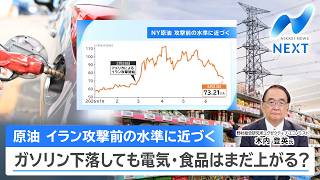
Crude oil prices have plunged to the low $70 range per barrel following the signing of a memorandum aimed at ending fighting between the United States and Iran, but while the immediate risk of an energy crisis appears to have eased, economists warn that price increases for electricity, food and everyday goods may still be about to intensify.

Japan will begin a new system on June 23 to sell paint and thinner directly from manufacturers to construction firms and other businesses, aiming to ease supply bottlenecks and curb price increases as worsening conditions in the Middle East make such materials harder to obtain.

Japan's reliance on Middle Eastern crude oil has left manufacturers exposed to rising costs for plastic containers, ink and other products that use naphtha, but JEPLAN President Masaki Takao is pushing a recycling technology that could reduce the need for petroleum-derived raw materials by turning used plastic back into material close to new.

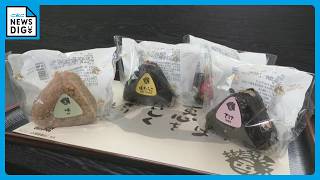
A rice ball chain based in Yokkaichi, Mie Prefecture, is feeling the effects of turmoil in the Middle East through higher costs and supply shortages for packaging film and other materials essential to selling onigiri.