News On Japan

Dental Clinics Face Higher Costs From Naphtha Shock

NAGOYA - Dental clinics are facing higher costs for gloves, masks and other supplies made from naphtha-derived materials, even as shortages ease following renewed conflict in the Middle East that has disrupted naphtha supplies.

At Johoku Dental Clinic in Nagoya’s Kita Ward, many of the materials used every day are derived from naphtha, including rubber gloves, masks, aprons placed over patients’ chests and sterilization bags used to wrap treatment instruments.

Hiroshi Goto, director of Johoku Dental Clinic and Orthodontics, said the supply situation has largely stabilized for now, but prices remain a burden. "At this point, things have calmed down quite a bit. However, partly because of the naphtha shock, prices for materials such as gloves have surged," Goto said.

The problem now is not a shortage of goods but rising prices. Rubber gloves are a particular concern because they are changed two or three times for each patient. The clinic uses about 6,000 gloves a month, increasing monthly expenses by about 8,000 yen.

The government began releasing 50 million stockpiled rubber gloves in May, but Goto said the scale of demand remains large. "There are 60,000 dental clinics alone nationwide. If many clinics use around 1,000 gloves a week, it feels a little uncertain," he said.

The clinic had created an inventory management chart through June, when shortages were severe, ranking materials by how difficult they were to obtain. The most difficult item to secure at the time was patient aprons, and the clinic is still trying to conserve supplies. "We were cutting them in half and using them," Goto said.

Medical institutions cannot pass on higher wholesale prices to patients because insured treatment fees are fixed. The main support they can rely on is the government’s revision of medical service fees. On June 1, fees were revised as a measure against rising prices, adding 10 yen per patient. But Goto said the increase has not kept pace with the sharp rise in material costs.

Asked whether 10 yen is enough, Goto said, "We have to make our own efforts." He said prices would need to rise roughly in line with materials such as masks, which have become 1.2 to 1.3 times more expensive. "If they rose by about that much, it would be helpful," he said.

The outlook for the Middle East became even more uncertain after a large-scale U.S. attack on the morning of July 8. Goto said the clinic will continue doing what it can to maintain supplies. "What we can do is steadily keep inventory. It would be even better if prices came down," he said.

Source: CBC

News On Japan
POPULAR NEWS

Large and very strong Typhoon No. 9 (Bavi) was moving west-northwest east of the Philippines as of early July 9 and is forecast to turn north while maintaining very strong intensity, potentially making a direct pass over Okinawa’s Sakishima Islands from the night of July 10 into July 11.

Akie Abe, the wife of former Prime Minister Shinzo Abe, has said she is only now becoming able to grieve honestly over her husband’s death, four years after he was shot and killed during an election campaign speech in Nara.

A nine-year dispute over the Linear Chuo Shinkansen effectively came to an end on July 7 as Shizuoka Governor Yasutomo Suzuki told the prefectural assembly that he would allow Central Japan Railway to begin construction on the Shizuoka section of the project.

Japan lowered passport application fees from July 1, drawing large crowds to application counters such as the one in Tokyo’s Shinjuku district, although applicants are being warned that issuance could take as long as about one month.

Tokyo will introduce a 3% accommodation tax on hotel and other lodging stays from April 2027, formally replacing its current flat-rate system and extending the levy to private lodging services.

MEDIA CHANNELS
         

MORE Oil Crisis NEWS

Marutake Tosou, a painting company founded about 50 years ago in Nagoya’s Nishi Ward, handles exterior walls and other building projects. Its workshop is lined with cans of thinner, an essential material used for sanding products and diluting paint, but at the end of April the company was struggling to secure supplies.

Dental clinics are facing higher costs for gloves, masks and other supplies made from naphtha-derived materials, even as shortages ease following renewed conflict in the Middle East that has disrupted naphtha supplies.

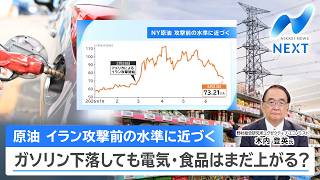
Crude oil prices have plunged to the low $70 range per barrel following the signing of a memorandum aimed at ending fighting between the United States and Iran, but while the immediate risk of an energy crisis appears to have eased, economists warn that price increases for electricity, food and everyday goods may still be about to intensify.

Japan will begin a new system on June 23 to sell paint and thinner directly from manufacturers to construction firms and other businesses, aiming to ease supply bottlenecks and curb price increases as worsening conditions in the Middle East make such materials harder to obtain.

Japan's reliance on Middle Eastern crude oil has left manufacturers exposed to rising costs for plastic containers, ink and other products that use naphtha, but JEPLAN President Masaki Takao is pushing a recycling technology that could reduce the need for petroleum-derived raw materials by turning used plastic back into material close to new.

A rice ball chain based in Yokkaichi, Mie Prefecture, is feeling the effects of turmoil in the Middle East through higher costs and supply shortages for packaging film and other materials essential to selling onigiri.

The global oil market could face a major supply surplus in 2027 if the United States and Iran maintain an agreement aimed at ending hostilities, the International Energy Agency said in its monthly report released on June 17.

Calbee's potato chips in black-and-white packaging appeared on convenience store shelves in Tokyo on June 17, reflecting the company's response to concerns over the stability of printing ink supplies derived from naphtha as tensions in the Middle East disrupted procurement.