News On Japan

All of Prime Minister Takaichi's Proposals Included in G7 Statement

GENEVA - A draft of the joint statement from the G7 summit in France has revealed that all proposals put forward by Prime Minister Takaichi on energy security and critical minerals have been incorporated into the agreement.

The sector-specific statement includes measures related to energy security that Takaichi advocated in response to developments in the Middle East, including support for strengthening oil stockpiles among participating countries.

The draft calls for support to help countries enhance their petroleum reserves with a target of maintaining supplies equivalent to 90 days of consumption. It also explicitly references cooperation with "Power Asia," a Japan-led framework that supports energy procurement.

In addition, the statement is expected to include plans for a joint stockpiling initiative for critical minerals such as rare earths. The draft states that the G7 will establish a cooperative mechanism among member nations to coordinate efforts in this area.

Source: FNN

News On Japan
POPULAR NEWS

Typhoon No. 13 (Dolphin) is forecast to intensify into a violent storm before approaching the Ogasawara Islands early next week, while a possible westward shift in its track is raising concern over potential effects in western Japan and Kyushu.

Residents across earthquake-stricken Kumamoto Prefecture are enduring extreme heat without water, electricity or air conditioning as rescue teams continue searching collapsed buildings following the powerful earthquake that registered the maximum seismic intensity of 7.

Three women have been confirmed dead and four employees remain unaccounted for after a powerful explosion tore through Aeon Mall Kumamoto in Kashima, Kumamoto Prefecture, following the magnitude 7.1 earthquake that struck the region on July 28.

Typhoon No. 13 (Dolphin) continued to intensify over the Marshall Islands on July 29 and is forecast to become a violent typhoon by July 31 before approaching the Ogasawara Islands early next week, potentially bringing severe winds, high waves and other effects to Japanese territory.

Prime Minister Sanae Takaichi said on July 29 that 13 people had died following the powerful earthquake that registered the maximum seismic intensity of 7 in Kumamoto Prefecture, including cases still being investigated for a possible connection to the disaster.

MEDIA CHANNELS
         

MORE Politics NEWS

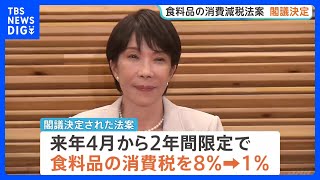
Prime Minister Sanae Takaichi moved closer on July 29 to adopting a sharp temporary cut in Japan’s food sales tax, turning cost-of-living relief into the next major political test for her government as markets remained uneasy over the weak yen, rising bond yields and the administration’s expansionary fiscal agenda.

Prime Minister Sanae Takaichi’s government moved on July 28 to reassure investors that it respects the Bank of Japan’s independence, as Finance Minister Satsuki Katayama said relations between the government and the central bank remain smooth despite market concern over rising bond yields, yen weakness and the administration’s growth-oriented fiscal agenda.

Prime Minister Sanae Takaichi entered the final week of July facing the sharpest political test of her administration so far, as a fall in public support exposed growing unease over the weak yen, rising living costs and doubts about whether her growth strategy can reassure both households and financial markets.

Artificial intelligence could bring changes equal to or greater than the Industrial Revolution, reshaping the role of government, society and policymaking, Mirai party leader Takahiro Anno said in an interview broadcast on July 26.

The Trump administration imposed new additional tariffs on Japan and 59 other countries and regions at 1:01 p.m. Japan time, shortly after President Donald Trump praised Shohei Ohtani and Yoshinobu Yamamoto during a White House ceremony honoring the Los Angeles Dodgers.

Japan's parliament enacted legislation on July 24 to establish a secondary capital capable of maintaining legislative and administrative functions if Tokyo is struck by a major disaster, while also seeking to reduce the excessive concentration of population and economic activity in the capital.

Prime Minister Sanae Takaichi entered the final full day of the extended Diet session on July 24 facing pressure from both parliament and financial markets, as opposition parties prepared to question her in Budget Committee deliberations while the ruling bloc sought to complete legislation central to its coalition with the Japan Innovation Party.

A Russian military intelligence officer accused of posing as an airline employee in Tokyo while overseeing the smuggling of high-tech equipment needed to sustain Russia's invasion of Ukraine left Japan after his activities were reported by The New York Times.