News On Japan

Bento boss apologizes for 500 cases of food poisoning

TOKYO - The president of the bento (boxed lunch) maker "Yoshidaya", responsible for over 500 cases of food poisoning nationwide last month, held his first press conference and gave a tearful apology.

Yoshidaya had outsourced the production of rice to an external contractor.

President Hiroshiro Yoshida explained, "Despite specifying the temperature for the rice, we did not measure its temperature on the first day of receiving it. We stored the rice as it was until the time of serving. We did not fully understand that under improper temperature management, there was a risk of bacteria proliferating over time. We deeply realize our immense responsibility for this incident."

The rice was warmer than usual when served, so they decided to cool it down before using it.

According to experts, "Even if cooled, the bacteria don't die, which can lead to food poisoning."

Additionally, the health department has pointed out that the containers for the rice were brought in without sterilization, and there was insufficient hand sanitation.

The number of food poisoning cases due to Yoshidaya's bento stands at 521. As the bentos were also sold at events, victims were identified across 29 prefectures nationwide. During the press conference, it was mentioned that one of the causes was over-expansion beyond their production capacity. The backdrop appears to be the business downturn due to the COVID-19 pandemic.

The president went on to say, "Prioritizing sales was my naivety as a manager. From the standpoint of providing for my employees, I made such a decision. I understand that I pushed them too hard."

Choking back tears and struggling for words at times, he confirmed that they would follow the health department's guidance and work on improving their operations.

He affirmed, "We will never outsource rice again."

News On Japan
POPULAR NEWS

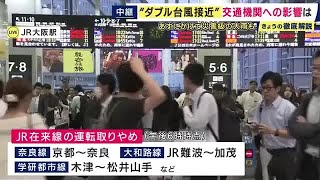
Typhoon No. 7 continued to disrupt travel across Japan on June 27, with Japan Airlines warning of possible delays and cancellations at Haneda, Narita and Nanki-Shirahama, while Shinkansen services were scheduled to operate normally but remained at risk of delays or sudden suspensions depending on rain and wind conditions.

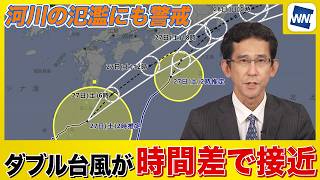
As of 3 a.m. on June 27, Typhoon No. 8 was racing northeast toward the Pacific side of eastern Japan while Typhoon No. 7 was moving east-northeast south of Yakushima, with the two storms and an active seasonal rain front threatening to bring two waves of heavy rain to Tokai and Kanto after floods, landslides and river swelling had already damaged parts of western Japan.

Japan advanced to the knockout stage of the World Cup after a 1-1 draw with Sweden on June 25, finishing second in Group F and setting up a Round of 32 clash with Brazil in Houston.

A powerful earthquake with a maximum seismic intensity of upper 6 struck off Iwate Prefecture at around 7:30 a.m. on June 25, shaking parts of Aomori Prefecture and leaving Hachinohe, which was hit by a similarly strong quake last December, facing fresh damage.

A powerful earthquake registering a maximum intensity of 6 upper on Japan’s seismic scale struck Aomori Prefecture at around 7:30 a.m. today. According to the Japan Meteorological Agency, the epicenter was off the coast of Iwate Prefecture, with a depth of about 50 kilometers. The earthquake’s magnitude was estimated at 6.9.

MEDIA CHANNELS
         

MORE Food NEWS

Japan Access, Japan's leading general food wholesaler, is expanding the potential of food logistics with frozen-to-chilled processing, a system that stores products frozen and thaws them only when orders arrive before shipping them to retailers as chilled goods.

Seven chefs tasked with developing athlete menus for the Asian Games opening in September visited a long-established Hatcho miso maker in Okazaki on June 22, as organizers look to promote Aichi’s food culture through fermented seasonings such as miso and soy sauce.

The rapid depreciation of the yen is driving up the cost of imported beef and other foods, prompting some restaurants and supermarkets to shift their focus toward domestic products as the price gap narrows.

A snack with the pungent smell and flavor of natto has been developed in Hakodate, Hokkaido, using no natto bacteria but delivering an aroma strong enough to make people react the moment the bag is opened.

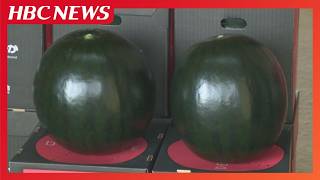
Harvesting began on June 18 for Densuke watermelons, a specialty of Toma in Hokkaido known for their glossy black rind, crisp texture and rich sweetness, with the season’s first auctions scheduled for June 19 at markets in Sapporo and Asahikawa.

The harvest of fruit-like sweet corn has reached its peak in Hekinan, Aichi Prefecture, where farmers begin picking before dawn to preserve the crop's high sugar content and freshness.

Japan byFood featuring Shizuka spends 24 hours exploring Yokohama, Japan’s second-largest city located just 30 minutes south of Tokyo.

The first auction of Raiden Watermelon, a specialty product of Kyowa in Hokkaido's Shiribeshi region, was held in Sapporo on June 9th, with a pair of melons fetching a record-high 400,000 yen.