News On Japan

Japan's nursing homes plunge into deficit for first time

TOKYO - Profit margins for special nursing homes in Japan have hit negative territory, diving to minus 1 percent for the first time since the introduction of the nursing care insurance system in April 2000.

The Ministry of Health, Labour and Welfare on Friday announced the results of a survey on the management status of nursing care service providers for the last fiscal year.

Special nursing homes, designed to provide long-term care for elderly individuals who require constant nursing care and assistance, recorded an average profit margin of -1%, and long-term care health facilities -1.1%, marking the first deficit since the start of the "kaigo rōjin hoken shisetsu", or nursing care insurance scheme.

The deficit is attributed to the rising cost of utilities and food.

News On Japan
POPULAR NEWS

Former Nissan Motor Chairman Carlos Ghosn said the automaker is in a "state of emergency" and signaled he would be willing to return as chief executive officer, arguing that only a true decision-maker in the CEO role could rescue the company.

The entire Negishi Housing Area in Yokohama, Kanagawa Prefecture, has been returned to Japan for the first time in 79 years, ending its use as a residential district for U.S. military personnel and their families.

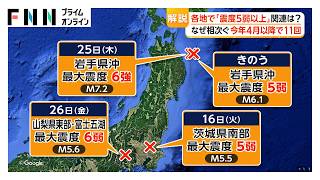
Strong earthquakes have continued to shake parts of Japan in recent weeks, with 11 temblors measuring lower 5 or above on the Japanese seismic intensity scale recorded across the country since April 2026.

A Kintetsu Railway train derailed inside Kyoto Station on the morning of June 29, forcing partial suspensions on the Kintetsu Kyoto Line for the rest of the day and causing long delays that hit commuters, students and tourists.

A section of stone wall at Hikone Castle, one of Japan’s few surviving original Edo-period castles and a National Treasure whose main keep remains intact more than 400 years after its construction, collapsed after heavy rain caused by Typhoons No. 7 and No. 8, Hikone city officials said.

MEDIA CHANNELS
         

MORE Business NEWS

Japan’s average roadside land price rose 2.9% from a year earlier, marking the steepest increase on record, as inbound tourism and redevelopment pushed up land valuations across the country.

More than 2,500 food items will become more expensive in July, with bread, instant noodles and other processed foods among the main categories affected as Middle East tensions and the weaker yen continue to push up costs.

Tokyo stocks edged higher on June 29 as investors bought back selected shares after a sharp AI-led selloff, but gains were capped by caution over high technology valuations, Middle East tensions and a weakening yen that fell to its lowest level against the dollar since 1986.

Tokyo stocks fell sharply on June 26 as investors locked in profits from Japan’s record-setting AI-driven rally, with SoftBank Group and chip-related shares leading a broad retreat after reports that OpenAI may delay its initial public offering.

Japanese households held 2,386 trillion yen in financial assets at the end of March, up 7.1% from a year earlier, as rising share prices, wider use of the new NISA investment program and the weaker yen lifted the value of assets held by individuals.

The sale of religious corporations that operate temples and shrines across Japan is drawing growing scrutiny from authorities, who fear the transactions could be used for tax evasion and money laundering, as brokers openly advertise properties and corporate status for tens or even hundreds of millions of yen.

The Nikkei Stock Average fell for a second straight session in Tokyo as investors locked in profits from a rapid rally in artificial intelligence and semiconductor-related shares, briefly sending the benchmark down more than 1,300 yen before bargain hunting helped it recover part of the loss.

Imabari Shipbuilding, Kawasaki Heavy Industries, and Namura Shipbuilding are aiming to resume construction of liquefied natural gas carriers around 2035, as Japan’s shipbuilding industry looks for a path to recovery after losing much of the global market to lower-cost rivals in South Korea and China.