News On Japan

Blue Eye Samurai: Historian explains what the Netflix series gets right and wrong about real Edo-period Japan

Dec 06, 2023 (theconversation.com) - Netflix’s Blue Eye Samurai is an anime series set during the opening decades of Japan’s Edo period (1603–1867), also known as the Tokugawa period. Among other subjects, the series addresses the role of samurai, what life was like for women and people of mixed heritage, and violence in Edo-period Japan – with varying degrees of accuracy.

Japanese society was strictly stratified at this time, as the series frequently references. The hierarchy was ranked, in descending order, by: samurai, farmer, artisan and merchant classes.

Even in the early stages of the 1600s Edo period, the entire samurai ruling class centred around the role of the warrior. But by the time the series opens, in the 1650s, the country was unified – a political and economically stable society – and this meant that the role of the samurai was in decline.

However, the samurai still defended the ideals of loyalty, courage and honour. It is these ideals that motivate Blue Eye Samurai’s principal characters, Mizu, Ringo and Taigen.

Mizu (Maya Erskine) is a mixed heritage white and Japanese woman living undercover as a male swordsmaster. She undertakes a quest for vengeance against four British men (one of whom may be her father), who illegally remain hidden in Japan during Sakoku.

Under Sakoku, only Dutch traders were permitted entry to Japan, and were confined to a small man-made island off Nagasaki. The Tokugawa shogunate’s (Japan’s military government during the Edo period) isolationist policy effectively closed the country’s borders to all outside influences through a number of edicts from 1633 to 1639. ...continue reading

News On Japan
POPULAR NEWS

Typhoon Jangmi (Typhoon No. 6) swept across Japan on June 3rd, bringing record-breaking rainfall, widespread flooding, landslides, transport disruptions, and powerful winds, while prompting Tokyo's first-ever issuance of a Level 4 danger alert under the country's new weather warning system. The storm also exposed challenges surrounding evacuation behavior, as many residents chose not to leave their homes despite official warnings affecting more than 1.6 million people across the Tokyo metropolitan area.

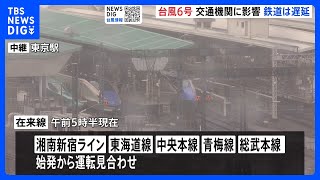
[updated 10:50 p.m.] Typhoon Jangmi (Typhoon No. 6) continued to disrupt transport across eastern Japan late on June 3rd, although many major rail and air services began shifting into recovery mode after the storm moved away into the Pacific, with nearly 900 flights canceled during the day, several regional railway lines still suspended, and operators warning that delays and reduced services could linger into June 4th.

As Typhoon Jangmi (Typhoon No. 6) struck Wakayama Prefecture on June 3rd, the storm became the first major test of Japan's newly introduced disaster weather warning system, revealing both the benefits of earlier evacuation calls and the challenges local authorities faced in helping residents understand and respond to the new alerts.

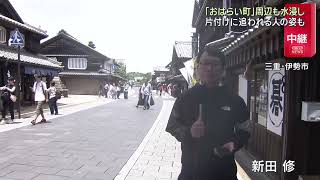
Flooding was reported around the popular tourist district of Oharai-machi in Ise City following the passage of Typhoon No. 6, with some businesses forced to clean up after floodwaters overflowed from a nearby river during the early hours of June 3rd.

A breaking weather alert was issued for the Izu region of Shizuoka Prefecture early Wednesday morning, after the formation of a linear rain band, a phenomenon capable of producing prolonged and extremely intense rainfall over the same area. Authorities warned that the risk of disasters has risen sharply as heavy rain continues to fall, increasing the likelihood of flooding, landslides, and other weather-related emergencies.

MEDIA CHANNELS
         

MORE Society NEWS

A 43-year-old man has been arrested after allegedly filming himself pouring a detergent-like liquid onto sushi at a Hama Sushi restaurant and posting the footage online, telling investigators he was seeking more views on social media.

A possible new development emerged in the murder of a mother and daughter in Tatsuno, Hyogo Prefecture, when a woman passing by a river in the city discovered a man floating face-up in the water at around 10:30 a.m. on June 3rd and alerted authorities.

Japan's total fertility rate, which represents the average number of children a woman is expected to have during her lifetime, fell to a record low of 1.14 in 2025, underscoring the country's deepening demographic challenges.

A senior member of a Sumiyoshi-kai affiliated organization and two other suspects have been arrested in connection with the theft of approximately 420 million yen in cash from a street in Tokyo's Ueno district in January 2026, bringing the total number of arrests in the case to 10.

A court has issued an interim ruling that the charge of robbery resulting in death applies in the case of a university student who died after a group assault in Ebetsu, Hokkaido.

A fire has destroyed Sasamasamune Brewery, a historic sake producer in Kitakata City, Fukushima Prefecture, leaving the future of the nearly 200-year-old business uncertain after large quantities of sake and brewing rice were lost in the blaze.

A medical examiner testified that a university student who died after being assaulted in Ebetsu, Hokkaido, suffered repeated blows to the face and head, telling the court that the victim was likely struck dozens of times.

A fire broke out at a temple in Kameoka, Kyoto Prefecture, on June 1st, leaving a resident monk with minor burns, destroying his home, and spreading into a nearby mountainside.