News On Japan

Japan's GDP to be overtaken by Germany in 2023, IMF forecasts

Dollar-denominated figures reflect Japan's long-term woes, worsened by weak yen

TOKYO - Germany's nominal gross domestic product is likely to overtake Japan's this year, with the weak yen and inflation in Europe pushing up the value of Germany's gross domestic product in U.S. dollar terms, according to a forecast by the International Monetary Fund.

The figures were presented in the fund's recently published World Economic Outlook. Nominal GDP indicates the level of economic activity in a country or region, including changes in the prices of goods and services. It is often used as an indicator of the size of a country's economy.

The forecast highlighted the long-term weakness of the Japanese economy.

According to the report, Japan's nominal GDP -- that is, unadjusted for inflation -- is expected to fall 0.2%, year-on-year, to $4.23 trillion in 2023, while Germany's is forecast to expand 8.4% to $4.42 trillion. The U.S., the world's largest economy, is expected to grow 5.8% to $26.94 trillion. China's economy, the world's second-largest, is forecast to shrink 1.0% to $17.7 trillion.

In 2000, Japan's economy was the second-largest in the world, at $4.96 trillion, which is larger than it is today. At the time, its economy was 2.5 times bigger than that of Germany and 4.1 times bigger than China's. At the beginning of that year, the exchange rate was about 105 yen per dollar. China overtook Japan and moved into second place in 2010. By the end of this year, its economy is forecast to be 4.2 times larger than Japan's. ...continue reading

News On Japan
POPULAR NEWS

Two typhoons moving across the Pacific southeast of Japan are expected to remain well away from the Japanese mainland, but powerful swells could bring rough seas to a wide stretch of the country's Pacific coastline throughout the three-day holiday weekend, according to forecasts updated at 3 a.m. on October 10.

A series of cyberattacks has disrupted business operations and exposed millions of customer records across Japan, with a ransomware attack on a cloud service provider affecting 495 companies and local governments nationwide, while convenience store operator Lawson has disclosed a separate breach involving more than 2.15 million personal information records.

Japan's first 360-degree projection mapping show will open at the Osaka City Museum of Fine Arts on October 10, transforming the historic building into an immersive world of light, music, and seasonal imagery, with organizers hoping the attraction will also help stimulate the city's nighttime economy.

Tokyo University of Science professor emeritus Kenzo Soai has been awarded this year's Nobel Prize in Chemistry together with French chemist Henri B. Kagan for discoveries that transformed scientists' understanding of how chemical reactions can favor one of two mirror-image forms of a molecule.

The US military suspended activities by all forces stationed in Okinawa for 48 hours from noon on October 7, an unusual measure following the arrest of a US Marine in connection with a robbery and murder case that has renewed scrutiny of crimes involving American service members.

MEDIA CHANNELS
         

MORE Business NEWS

Tokyo stocks fell sharply on June 26 as investors locked in profits from Japan’s record-setting AI-driven rally, with SoftBank Group and chip-related shares leading a broad retreat after reports that OpenAI may delay its initial public offering.

Japan recorded a current account surplus of 4.062 trillion yen in August, an increase of 12% from a year earlier, driven primarily by a sharp rise in income from overseas investments, even as higher crude oil prices pushed the country's trade balance into deficit.

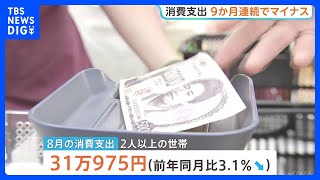
Household spending in Japan fell 3.1% in August from a year earlier, marking the ninth consecutive month of decline as rising food prices continued to weigh on consumer budgets, according to the latest household expenditure survey released by the Ministry of Internal Affairs and Communications on October 9.

Tokyo stocks ended nearly unchanged on August 12, with the Nikkei 225 at 66,988.82, as gains in energy and financial shares offset weakness in electronics and pharmaceuticals while investors weighed higher crude oil prices, a weaker yen and growing expectations for another Bank of Japan rate increase.

Japan is entering a more difficult phase in its cybersecurity challenge, as a succession of major data breaches and ransomware attacks exposes weaknesses not only in corporate IT systems but also in supplier networks, governance structures and operational resilience.

Japan's four largest beer makers were subjected to simultaneous compulsory searches on October 7 over suspicions they coordinated wholesale prices for beer and other alcoholic beverages, in a rare cartel investigation that could lead to criminal charges.

Tokyo stocks fell on October 7, with the Nikkei 225 closing at 70,036, down 648 points, as investors took profits in semiconductor and artificial intelligence-related shares after the index’s rapid climb above 70,000 earlier in the week.

Japan's prolonged period of rising prices is continuing to squeeze households and businesses, driven by the weak yen, higher raw material costs and rising wages, forcing consumers to change how they shop and cook while companies search for ways to contain costs without losing customers.