News On Japan

Celebrating 100 Years of Surrealism: Its Impact on Japanese Culture

TOKYO - As we mark the 100th anniversary of Andre Breton's "Surrealist Manifesto" in 1924, we reflect on the profound influence the art movement, born in France, had on poetry, thought, and painting—a fascination that extended to Japanese artists of the time.

In the late 1920s, pioneers like Harue Koga, Seiji Togo, and Ichiro Fukuzawa began experimenting with Surrealism. The 1930s saw a new generation of young painters and art students expanding their expressive range under the influence of Ernst and Dalí. This period also witnessed the creation of iconic works by Japanese Surrealists, including Ai-Mitsu and Noboru Kitawaki.

However, during the war years, Surrealism was monitored as a dangerous ideology, and some artists who were drawn to it perished in the conflict, making it a challenging time for the movement. Despite these difficulties, the influence of Surrealism persisted post-war. Artists like Kikuji Yamashita confronted a society in turmoil and continued to produce uniquely Japanese Surrealist works.
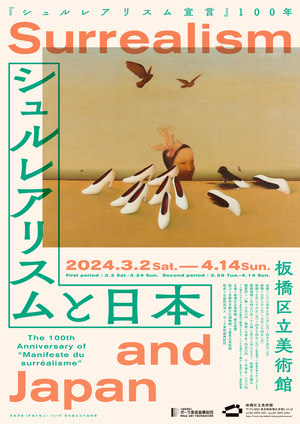
Surrealism spread not only in Tokyo but throughout Japan. During the tumultuous wartime and post-war eras, artists engaged with the avant-garde expression of Surrealism, confronting the times through their work. This legacy is examined through approximately 120 pieces of art and documents.

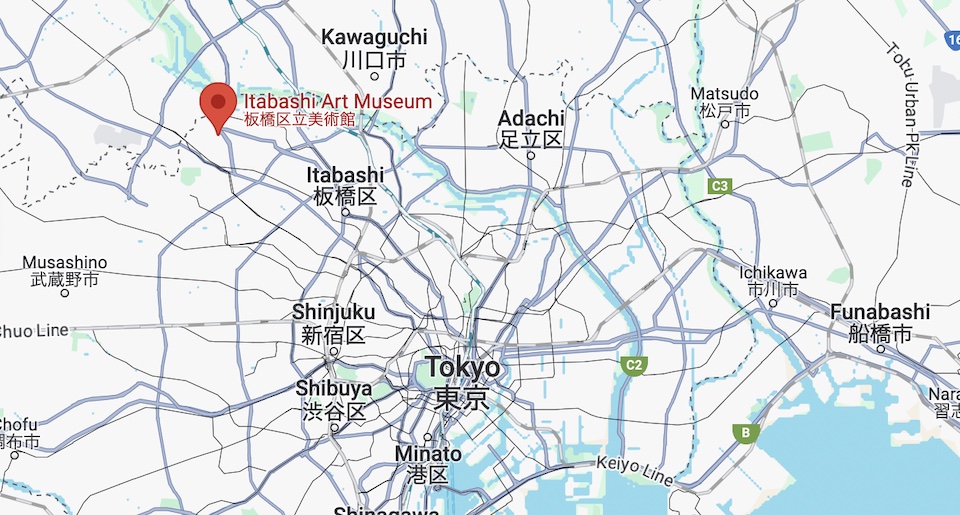
The exhibition is held at the Itabashi Art Museum in Tokyo, located at 5-34-27 Akatsuka, Itabashi-ku, from Saturday, March 2, 2024, to Sunday, April 14, 2024. Admission fees are as follows: General admission is 650 yen (450 yen for groups of 20 or more), high school and university students are 450 yen (300 yen for groups), and elementary and junior high school students are 200 yen (100 yen for groups). Group rates are indicated in parentheses. On Saturdays, admission is free for elementary, junior high, and high school students. Seniors aged 65 and over receive a 50% discount, and individuals with a disability pass receive a 50% discount, with free admission for one accompanying person. The museum is open on Mondays from 9:30 AM to 5:00 PM, with last admission 30 minutes before closing. For inquiries, please contact 03-3979-3251. This information is provided by the Itabashi Art Museum and the Tokyo Shimbun.

Source: artscape
Celebrating 100 Years of Surrealism: Its Impact on Japanese Culture Google Maps
News On Japan
POPULAR NEWS

Japan’s World Cup campaign ended in the cruelest possible fashion on June 29, as Gabriel Martinelli scored in the fifth minute of stoppage time to give Brazil a 2-1 victory over the Samurai Blue in their knockout match in Houston. Japan had led in the first half and were still level at 1-1 in the final moments, but Martinelli’s late strike sent Brazil into the Round of 16 and eliminated Japan from the tournament.

Strong earthquakes have continued to shake parts of Japan in recent weeks, with 11 temblors measuring lower 5 or above on the Japanese seismic intensity scale recorded across the country since April 2026.

A Kintetsu Railway train derailed inside Kyoto Station on the morning of June 29, forcing partial suspensions on the Kintetsu Kyoto Line for the rest of the day and causing long delays that hit commuters, students and tourists.

A section of stone wall at Hikone Castle, one of Japan’s few surviving original Edo-period castles and a National Treasure whose main keep remains intact more than 400 years after its construction, collapsed after heavy rain caused by Typhoons No. 7 and No. 8, Hikone city officials said.

Japan advanced to the knockout stage of the World Cup after a 1-1 draw with Sweden on June 25, finishing second in Group F and setting up a Round of 32 clash with Brazil in Houston.

MEDIA CHANNELS
         

MORE Travel NEWS

A section of stone wall at Hikone Castle, one of Japan’s few surviving original Edo-period castles and a National Treasure whose main keep remains intact more than 400 years after its construction, collapsed after heavy rain caused by Typhoons No. 7 and No. 8, Hikone city officials said.

The Japan Meteorological Agency said at around 2 p.m. on June 29 that the rainy season appeared to have ended in Okinawa, marking a later-than-usual start to summer after an especially wet period.

Japan’s weather agency carried out field inspections in Yamanashi Prefecture on June 28 after a powerful earthquake struck the Fuji Five Lakes area late on June 26, registering a lower 6 on Japan’s seismic intensity scale in Fujikawaguchiko and injuring six people.

According to updates on June 28, the double-typhoon system that brought record rain, flooding, landslides and fallen trees to parts of Japan has moved away, but Kanto remains under cloudy rainy-season skies, with intermittent rain still possible and saturated ground keeping the risk of landslides high in areas hit by heavy rain.

The Kanto region is experiencing an unusual June, with three typhoons approaching the area during the month and rainfall totals already reaching record levels in some locations.

Damage was reported across the Kansai region after a stationary seasonal rain front and an approaching typhoon brought torrential rain on June 26, triggering landslides in Seika, Kyoto Prefecture, flooding homes in Nara, and disrupting roads and railway services in Osaka and surrounding areas.

A powerful earthquake with a maximum seismic intensity of upper 6 struck off Iwate Prefecture at around 7:30 a.m. on June 25, shaking parts of Aomori Prefecture and leaving Hachinohe, which was hit by a similarly strong quake last December, facing fresh damage.

Rice field art depicting Los Angeles Dodgers star Shohei Ohtani and his dog Decoy is nearing its best viewing period in Oshu, Iwate Prefecture, Ohtani’s hometown.