News On Japan

Hokkaido to Ease Brown Bear Alerts

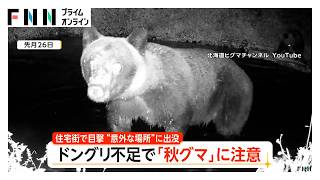
HOKKAIDO, Jan 14, 2026 (News On Japan) - Hokkaido is set to relax the criteria for issuing its so-called “brown bear alert,” making it possible to release warnings even before human injuries occur, as the prefecture seeks to respond more flexibly to the early appearance of dangerous animals.

Under the current system, a brown bear alert is issued to municipalities when a person is injured by a bear near a populated area, with the prefectural and local governments urging residents to remain vigilant through official websites and other channels.

The prefecture now plans to expand the criteria so that alerts can also be issued in situations where the risk of human injury has risen sharply, such as when bears that show little fear of people repeatedly appear in urban areas, even if no injuries have yet been reported.

Along with the revised standards, Hokkaido will also define specific measures to be taken by municipalities once an alert is issued, including round-the-clock patrols.

The proposed changes were scheduled to be reported to the prefectural assembly on January 14th, with a final decision expected within January.

Source: HBCニュース 北海道放送

News On Japan
POPULAR NEWS

Japan began applying a new numerical alcohol threshold for dangerous driving offenses on July 21, introducing a clearer standard for cases involving impaired driving that could lead to fatal accidents.

Prime Minister Sanae Takaichi's government approved its first annual basic economic and fiscal policy on Tuesday, pledging "responsible and proactive fiscal policy" and envisioning about 370 trillion yen in public- and private-sector investment in strategic industries through fiscal 2040.

A covert network of shuttle tankers is carrying crude through the increasingly dangerous Strait of Hormuz as renewed fighting between the United States and Iran disrupts shipping and raises concerns over how Japan will secure the oil it needs.

Russian Deputy Foreign Minister Andrey Rudenko has criticized moves by Japanese and Ukrainian companies to cooperate on drone technology, warning that such ties would be regarded by Moscow as a "clear hostile act."

The rainy season ended in the Kanto-Koshin and Tokai regions on July 20 as strengthening high pressure brought intense heat across Japan, with temperatures forecast to reach 38 C in Kumagaya, Saitama Prefecture, and Kofu.

MEDIA CHANNELS
         

MORE Travel NEWS

Japan’s newest luxury cruise ship, Asuka III, offers passengers the experience of a high-end hotel at sea, combining private balconies, fine dining, Japanese-style bathing and personalized service on voyages around the country.

The rainy season ended in the Kanto-Koshin and Tokai regions on July 20 as strengthening high pressure brought intense heat across Japan, with temperatures forecast to reach 38 C in Kumagaya, Saitama Prefecture, and Kofu.

Severe heat spread across Japan on July 20 as a Pacific high-pressure system covered much of the country, pushing the temperature in central Tokyo to 35 degrees Celsius for the first time this year.

Nagashima Jumbo Seawater Pool in Kuwana, Mie Prefecture, was packed with visitors on Marine Day, the final day of a three-day weekend, as families sought relief from intense summer heat following the end of the rainy season in the Tokai region.

A beach where visitors can swim alongside whales has opened in Taiji, Wakayama Prefecture, drawing families and children eager to see the animals at close range.

An interactive exhibition recreating the world of Studio Ghibli will open at Osaka's ATC complex on July 18, offering visitors of all ages the chance to experience famous scenes and characters from the studio's animated films.

Heavy rain flooded railway tracks in Hokkaido, forcing the cancellation of 32 trains, including limited express services linking Sapporo and Hakodate.

Japan is likely to face increasingly long and dangerously hot summers as global temperatures continue to rise, with advanced climate simulations also pointing to more frequent torrential rain, rising seas and accelerating ice loss by the end of the century.