TOKYO - February 10, marked in Japan as Left-Handed Goods Day through a play on the numbers “0,” “2,” and “10,” has drawn renewed attention to the daily inconveniences faced by left-handed people
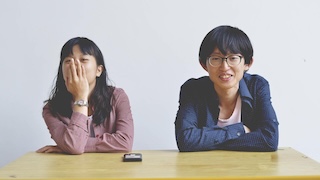
Left-handed individuals often encounter small but persistent obstacles in everyday life, from bumping hands at the dinner table to struggling with tools designed primarily for right-handed use. A teenager interviewed for the segment said that when eating with friends, hands can overlap because most people use their right hand, while a person in their 50s pointed out that standard scissors do not align correctly for left-handed use, making precise cutting difficult. Such inconveniences extend to stationery and office supplies, with planners presenting particular challenges: when left-handed users write in conventional notebooks, their hand can obscure the schedule columns, making it harder to see what has already been written.
To address this, the brand HIDARI has released the “Left-Handed Planner 2026,” priced at 3,300 yen and available at outlets such as Shibuya Loft, which places the schedule section on the right side so left-handed users can write without covering their entries. Similarly, the act of using a standard box cutter can pose problems, as extending the blade often leaves it facing upward when held in the left hand. The “Orante” cutter by PLUS, priced at 627 yen and sold at stores including Hands Shinjuku, features a side-mounted slider that allows it to be used comfortably regardless of which hand is dominant.
The recent popularity of knitting has also highlighted disparities in accessibility for left-handed learners. Many online tutorials and printed guides are designed for right-handed users, forcing left-handed beginners to mentally reverse the instructions. A person in their 20s said that when first trying to learn knitting, most instructional videos were right-handed, making the initial stages difficult. In response, Nitto Shoin Honsha has published “Crochet Textbook for Left-Handers” by Junko Sano, a guide written specifically for left-handed readers. A left-handed program staff member said that only after using left-handed materials did they fully understand the steps involved in their work, while another young interviewee expressed hope that more left-handed content will become available as awareness grows.
Discussion of left-handed challenges has also extended into broadcast studios and public life. A news anchor noted that even something as simple as serving soup at a buffet can be difficult for left-handed people when ladles are positioned for right-handed use. Another anchor said she was born left-handed but was encouraged by her parents to switch to using her right hand, reflecting a long-standing tendency in Japan to guide children toward right-handedness. However, attitudes appear to be changing, with increasing acceptance that individuals need not alter their dominant hand.
This shift is visible in educational materials as well. The 2015 edition of Tokyo Shoseki’s calligraphy textbook “Newly Edited New Calligraphy” provided only one line of practice squares on the right side of the page, effectively prioritizing right-handed writing. The 2024 edition has been revised to include two lines of practice squares, allowing students to write comfortably on either the right or left side and better accommodating left-handed learners.
As more companies and institutions acknowledge the needs of left-handed users, the market for specialized goods continues to expand, and advocates say that broader availability of left-handed-friendly tools, instructional content, and educational materials will help reduce everyday stress for left-handed people while promoting greater inclusivity in design and learning environments.
Source: TBS