News On Japan

Japan’s Job Market Remains Tight, Starting Salaries Hit 400,000 Yen

TOKYO - With company information sessions for university students set to graduate next spring opening in March, Japan’s job-hunting season has entered full swing, once again unfolding under what is widely seen as a candidate-driven seller’s market.

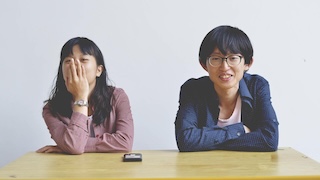
At a joint career fair held on March 2nd, attention centered on a key issue shaping this year’s recruitment efforts: starting salaries. As inflation continues to squeeze household budgets, students are placing greater emphasis on entry-level pay. One student said, "With prices rising, I would prefer a higher starting salary."

More than half of companies plan to raise initial pay. Consumer electronics retailer Nojima has announced a maximum starting salary of 400,000 yen, while Dai-ichi Life Insurance has increased its general career-track starting salary to 354,000 yen. A growing number of firms are moving to boost pay in a bid to secure talent.

Yet higher wages alone do not appear to be enough to win over students.

Some said they want to prioritize companies that allow them to work within commuting distance from their homes. Others emphasized the importance of workplace compatibility. One student noted, "What matters most is whether the personality and atmosphere fit. I want to focus on that."

MyNavi, which organized the event, said simply raising starting salaries is not a strong enough selling point. The company expects recruitment difficulties to persist as firms compete for a shrinking pool of graduates in a tight labor market.

Source: TBS

News On Japan
POPULAR NEWS

Large Typhoon No. 25 was moving northwest over waters south of Japan at 3 p.m. on September 19 and is forecast to strengthen as it approaches Kanto and the Izu Islands from September 20 through September 21, bringing the risk of torrential rain, violent winds and further damage in areas still recovering from last year's typhoon.

A black bear has been spotted near one of the most popular hiking trails on Mount Takao in western Tokyo, prompting authorities to urge visitors to take precautions ahead of the five-day Silver Week holiday and the approaching autumn foliage season.

Starbucks is considering selling a majority stake in its Japanese business, potentially valued at as much as $3 billion, or about 470 billion yen, as the U.S. coffee chain seeks to concentrate management resources on its struggling North American operations.

Japan's Halloween Jumbo Lottery went on sale nationwide on September 16, offering a combined top payout of 400 million yen for the first prize and its adjacent-number prizes.

A new top-tier "Supreme Class" offering fully private compartments above the level of Green Car service will debut on the Tokaido and Sanyo Shinkansen on October 1, with passengers able to experience the new seating at a demonstration booth at Shin-Osaka Station.

MEDIA CHANNELS
         

MORE Education NEWS

A groundbreaking ceremony was held in Kyoto City on September 15 for Ronald McDonald House Kyoto, a residential facility where children undergoing medical treatment will be able to stay together with their families.

Elementary school students in Fukuoka got a hands-on lesson in the importance of taxes on September 11, lifting a 10-kilogram replica of 100 million yen as part of a class designed to show how public money supports society.

Raccoons are increasingly appearing in urban areas of Japan, including residential neighborhoods near Shin-Osaka Station, raising concerns over disease, attacks on people and agricultural damage that reached about 700 million yen nationwide last year.

Japanese 15-year-olds spend an average of 2.3 hours browsing social media during their weekday free time, the shortest amount among 24 countries surveyed, according to data from the Organization for Economic Cooperation and Development.

Renovation work has begun at a hospital in Izumisano, Osaka Prefecture, as the city prepares to introduce a baby hatch for parents unable to raise their children and a confidential birth system that allows pregnant women to give birth without publicly disclosing their identities.

A disaster prevention experiment has shown how quickly a rain-soaked slope can collapse once visible cracks appear, highlighting the need for people in landslide-prone areas to evacuate before conditions become critical as the risk of disasters remains elevated through early next week.

Nearly 60% of Japanese high school students consider learning about different cultures "very important," the highest proportion among Japan, the United States, China and South Korea, according to a survey released by the National Institution for Youth Education.

The number of elderly people in Japan with no relatives to rely on is projected to rise to 4.48 million by 2050, or roughly one in nine seniors, prompting the government to create a new system under revised social welfare laws to support people with daily needs, hospitalization and arrangements after death.