News On Japan

Bear Sightings Spread Across Japan, Experts Call It Abnormal

IWATE, Feb 27, 2026 (News On Japan) - Although February is typically the height of the hibernation season, bears have already been sighted across Japan, raising concerns of another wave of deadly encounters.

On February 12th, at a time when bears are normally still hibernating, a single bear believed to be an Asian black bear was seen walking across a snowy mountain in Hakusan City, Ishikawa Prefecture.

According to the Nature Conservation Center that filmed the animal, bear sightings in the area usually begin around mid-March, meaning the bear appeared roughly one month earlier than usual.

On February 13th in Hanamaki City, Iwate Prefecture, another bear was spotted. During efforts by a local hunting association to drive it away using fireworks, one male member was attacked and injured.

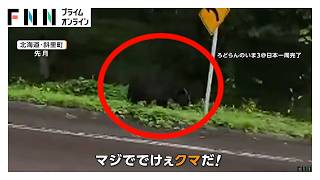
Further north, on February 24th, a bear was also seen at Shunkunitai in Nemuro, Hokkaido. At around 8 a.m., photographers who had gathered to capture images of wild birds noticed a single bear walking in the distance near the lake.

One witness said: "We saw something black moving. When I quickly brought my camera over to check, it was a bear walking. It's unusual for this time of year."

The area is known as a popular destination for bird photographers, and another sighting had reportedly occurred the previous afternoon.

Amid the growing encounters, Hokkaido has already recorded a record number of brown bear captures. In fiscal 2025, the number of captured bears reached 2,013 as of the end of January, surpassing the previous high of 1,804 recorded in fiscal 2023.

In the Kanto region as well, two bear sightings were reported on February 23rd along a riverbed in Ashikaga City, Tochigi Prefecture.

Why are sightings occurring so frequently despite the hibernation season?

Takanori Yamauchi, associate professor at the Faculty of Agriculture at Iwate University, said: "This is normally a period when bears are hibernating, so sightings at this time are extremely rare. It is an abnormal situation not seen in typical years. The end of hibernation is said to be strongly influenced by rising temperatures and snowmelt. If spring arrives earlier, bears may awaken sooner than we expect."

Yamauchi added that nuts and other food sources in the mountains have not yet fully developed, raising the possibility that bears may descend into residential areas in search of food, and he urged the public to remain cautious.

Source: FNN

News On Japan
POPULAR NEWS

Japan began applying a new numerical alcohol threshold for dangerous driving offenses on July 21, introducing a clearer standard for cases involving impaired driving that could lead to fatal accidents.

Prime Minister Sanae Takaichi's government approved its first annual basic economic and fiscal policy on Tuesday, pledging "responsible and proactive fiscal policy" and envisioning about 370 trillion yen in public- and private-sector investment in strategic industries through fiscal 2040.

A covert network of shuttle tankers is carrying crude through the increasingly dangerous Strait of Hormuz as renewed fighting between the United States and Iran disrupts shipping and raises concerns over how Japan will secure the oil it needs.

Russian Deputy Foreign Minister Andrey Rudenko has criticized moves by Japanese and Ukrainian companies to cooperate on drone technology, warning that such ties would be regarded by Moscow as a "clear hostile act."

The rainy season ended in the Kanto-Koshin and Tokai regions on July 20 as strengthening high pressure brought intense heat across Japan, with temperatures forecast to reach 38 C in Kumagaya, Saitama Prefecture, and Kofu.

MEDIA CHANNELS
         

MORE Travel NEWS

Japan’s newest luxury cruise ship, Asuka III, offers passengers the experience of a high-end hotel at sea, combining private balconies, fine dining, Japanese-style bathing and personalized service on voyages around the country.

The rainy season ended in the Kanto-Koshin and Tokai regions on July 20 as strengthening high pressure brought intense heat across Japan, with temperatures forecast to reach 38 C in Kumagaya, Saitama Prefecture, and Kofu.

Severe heat spread across Japan on July 20 as a Pacific high-pressure system covered much of the country, pushing the temperature in central Tokyo to 35 degrees Celsius for the first time this year.

Nagashima Jumbo Seawater Pool in Kuwana, Mie Prefecture, was packed with visitors on Marine Day, the final day of a three-day weekend, as families sought relief from intense summer heat following the end of the rainy season in the Tokai region.

A beach where visitors can swim alongside whales has opened in Taiji, Wakayama Prefecture, drawing families and children eager to see the animals at close range.

An interactive exhibition recreating the world of Studio Ghibli will open at Osaka's ATC complex on July 18, offering visitors of all ages the chance to experience famous scenes and characters from the studio's animated films.

Heavy rain flooded railway tracks in Hokkaido, forcing the cancellation of 32 trains, including limited express services linking Sapporo and Hakodate.

Japan is likely to face increasingly long and dangerously hot summers as global temperatures continue to rise, with advanced climate simulations also pointing to more frequent torrential rain, rising seas and accelerating ice loss by the end of the century.