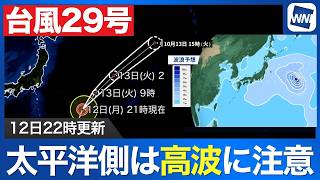
TOKYO - [updated 10:50 p.m.] Typhoon Jangmi (Typhoon No. 6) continued to disrupt transport across eastern Japan late on June 3rd, although many major rail and air services began shifting into recovery mode after the storm moved away into the Pacific, with nearly 900 flights canceled during the day, several regional railway lines still suspended, and operators warning that delays and reduced services could linger into June 4th.
The storm made its closest approach to the Kanto region during the afternoon before moving offshore east of Japan. While the worst of the rain and wind had passed across the Tokyo metropolitan area by evening, transport operators continued to urge passengers to check the latest information before traveling, particularly on regional rail lines, airport access routes and flights affected by aircraft rotation delays.
Air travel remained the most heavily affected sector. Airlines canceled nearly 900 domestic and international flights on June 3rd, affecting about 90,000 passengers. Japan Airlines and All Nippon Airways continued to advise travelers to check flight information before leaving for airports as operations remained subject to weather conditions and recovery efforts.
Earlier in the day, JAL canceled 292 domestic flights affecting about 32,500 passengers, while ANA canceled 232 domestic flights affecting around 31,000 passengers. International operations were also disrupted, with the two airlines canceling a combined 92 international flights and affecting about 16,550 passengers.
By late evening, JAL’s outlook for June 4th no longer listed airports in Kanto, Tokai or Kansai as areas expected to be affected by typhoon-related bad weather. The airline said flights on June 4th could still be affected at Nemuro-Nakashibetsu and Kushiro in Hokkaido because of poor visibility, and at several airports in Kagoshima Prefecture and the Amami island chain for the same reason.
ANA continued to allow fee-free changes and refunds for affected tickets, including all flights to and from Haneda from June 3rd through the final flight on June 4th. The airline said travelers should continue checking individual flight status because some services may still be affected by aircraft positioning, crew arrangements or residual weather conditions even after the storm itself has moved away.
Haneda Airport reported continued flight cancellations during the day and urged passengers to confirm flight status with their airlines. The airport's domestic-connection check-in counter in Terminal 3 was closed for the full day, requiring connecting passengers to check in through airline counters in Terminals 1 and 2.
Jetstar Japan said flights involving Narita, Chubu and Kansai airports continued to face delays and cancellations, while passengers remained eligible for special ticket-change and refund measures. Kansai Airport also warned that flight operations and airport access could be affected even after the storm center moved away from Japan.
Railway disruption remained widespread during the day, but several major routes had recovered by late evening. JR East said the Tokaido Line, Shonan-Shinjuku Line, Chuo Line rapid service, Chuo Main Line, Ome Line, Hachiko Line, Ito Line and several other routes were operating normally by around 10:48 p.m.
Some regional lines remained affected. The Koumi Line between Kobuchizawa and Nakagomi was suspended for the full day, with no substitute bus service. JR East said operations on the section were expected to resume from the first train on June 4th.
The Joban Line resumed service between Katsuta and Iwaki at around 10:23 p.m. after being suspended because of an obstruction on the tracks between Katsuta and Sawa, but delays and cancellations remained on some trains. JR East also said some services between Mito and Iwaki had been canceled earlier because of the typhoon, although limited late-evening trains were operating.
The Suigun Line remained suspended on sections including Mito to Hitachi-Daigo and Kami-Sugaya to Hitachi-Ota, with no substitute bus or taxi services. The Mito Line, which had been scheduled to suspend operations between Tomobe and Oyama, began limited resumption during the evening, though some trains remained canceled.
Several Chiba-area routes were also suspended for the full day. The Sobu Main Line between Sakura and Choshi, the Uchibo Line between Kimitsu and Awa-Kamogawa, the Sotobo Line between Kazusa-Ichinomiya and Awa-Kamogawa, the Kashima Line between Sawara and Kashimajingu, the Kururi Line between Kisarazu and Kazusa-Kameyama, and the Narita Line between Narita and Choshi were all set to resume normal operations from the first train on June 4th, according to JR East.
The Tokaido Shinkansen operated through the day, although JR Central had warned that services could be suspended or modified at short notice depending on rainfall and wind conditions. Conventional rail services across central Japan also faced disruptions earlier in the day, with sections of the Tokaido Line, Minobu Line and Gotemba Line affected.
JR West and JR Shikoku also reported service suspensions and cancellations across parts of Kansai and Shikoku as operators carried out safety inspections and monitored weather conditions.
Road transport showed signs of easing by evening. NEXCO East issued a final notice at 4:30 p.m. saying the possibility of typhoon-related expressway closures in its area had ended, though it urged drivers to continue checking the latest road information because the storm’s effects could still remain.
NEXCO Central and other expressway operators had warned earlier that sections of the Tomei Expressway, Shin-Tomei Expressway, Chuo Expressway and Shin-Meishin Expressway could be affected by closures or restrictions. Drivers were urged to avoid unnecessary travel and to consider wider-area detours where needed.
Highway bus operators canceled a large number of services connecting Tokyo with Osaka, Kyoto, Nagoya, Hamamatsu, the Fuji Five Lakes region, Ibaraki Prefecture and other destinations. Operators warned that restart times would depend on road conditions and could change with little notice.
The storm also caused broader disruption beyond transport. Approximately 60,000 households lost power at various points during the day, while authorities reported at least 15 injuries linked to weather-related incidents. More than 1.6 million residents in Tokyo, Kanagawa and Chiba prefectures were at one point placed under evacuation advisories as rivers rose and flooding concerns intensified.
Flooding and water damage were reported in multiple locations. Rivers including the Nogawa, Meguro River and Zenpukuji River rose significantly, while roads were inundated in parts of Ibaraki Prefecture. In Ome City, western Tokyo, flooding affected water-supply infrastructure, prompting concerns that around 1,800 households could experience water outages or reduced water pressure.
Despite improving weather around Tokyo, authorities warned that saturated ground conditions could continue to raise the risk of landslides and river flooding. Rough seas were also expected to persist along the Pacific coast, with high waves continuing from eastern Japan into southern Tohoku.
Forecasters said Typhoon Jangmi was expected to continue moving eastward into the Pacific and gradually weaken, eventually transitioning into an extratropical cyclone. Although transport services were beginning to recover late on June 3rd, operators warned that some cancellations, delays and reduced services could continue into June 4th because of safety checks, aircraft rotation issues and lingering weather impacts.
Sources:
ウェザーニュース: 交通への影響予測を解説 新幹線にも影響か
TBS: 鉄道で始発から運転見合わせも 東海道新幹線は始発から運転実施も急遽見合わせの可能性 空の便にも欠航相次ぐ 羽田空港で700便以上【台風6号 交通機関への影響】
Weathernews: Typhoon No. 6 Transport Impact Forecast
JAL: Domestic Flight Weather Information
Haneda Airport: Notice on Typhoon No. 6 Flight Cancellations
Nagoya TV / ANN: ANA and JAL Flight Cancellation Figures
JR Central: Tokaido-Sanyo Shinkansen Operation Information
FNN: Tokaido Shinkansen Disruption and Ticket Refund Information
JR West: Sanyo Shinkansen Operation Information
JR Central: Conventional Line Operation Information
NEXCO Central Japan: Possible Expressway Closures Due to Typhoon No. 6
NEXCO Central Japan: Road and Expressway Notices
News On Japan Related Coverage:
Typhoon Jangmi Leaves Trail of Destruction Across Japan
Residents Urged to Seek Safety as Extreme Rain Batters Izu
Level 5 Flooding Report Issued for Rivers in Tokushima