News On Japan

Should Foreigners Be Restricted from Buying Homes in Japan?

TOKYO - As Japan's Upper House election approaches, party leaders debated whether restrictions should be placed on foreign property ownership. Amid soaring housing prices—especially in Tokyo where secondhand condominium prices now exceed 100 million yen—seven of the eight major political parties expressed support for some form of regulation on foreign homebuyers.

As the dream of homeownership becomes increasingly elusive for many Japanese citizens, foreign investment—particularly from wealthy individuals abroad—has come under scrutiny as a contributing factor to the real estate boom. The question posed to party leaders was whether Japan should follow the example of other countries that have introduced regulations or taxes on property purchases by foreigners.

Seven of the eight parties voiced support for some level of restriction. Liberal Democratic Party leader Ishiba acknowledged that speculation in real estate, whether by foreigners or Japanese nationals, is problematic and emphasized the need to urgently assess the situation while referencing international legal frameworks. Constitutional Democratic Party leader Noda supported the idea of reciprocal arrangements but stressed that areas near critical national infrastructure should be subject to independent regulations for security reasons. Japan Innovation Party leader Yoshimura argued that there is a clear imbalance since Japanese nationals cannot buy land in China, yet Chinese buyers face no such limitations in Japan. He insisted that Japan should establish equal conditions.

Komeito leader Saito, drawing from his experience as the former Minister of Land, Infrastructure, Transport and Tourism, noted that the issue had been seriously considered within his party and included in their election platform, particularly in light of relations with China. Tamaki, head of the Democratic Party for the People, cited Canada as an example, where foreign buyers are taxed if they purchase homes for non-residential or speculative purposes. He said his party intends to submit legislation on the issue during the autumn extraordinary session of the Diet. Reiwa Shinsengumi’s Oishi pointed to a global trend of ultra-wealthy individuals acquiring property worldwide, leading to inflated housing markets and unaffordable rents, and called for international regulation of such wealth accumulation. Sanseito leader Kamiya warned that without restrictions, Japanese citizens would continue to be outbid by foreign buyers, many of whom do not reside in Japan, making it difficult to enforce inheritance or property taxes and exacerbating economic inequality.

Only the Japanese Communist Party opposed the idea of restricting foreign buyers, with chair Tamura arguing that the real issue lies in speculative investment itself, not the nationality of the investor. She stated that targeting foreigners specifically is misguided and that regulations should apply universally to those who treat property as a financial asset rather than a place to live.

The debate underscored growing public concern over housing affordability and the role of foreign capital in domestic real estate, setting the stage for what many consider a crucial election for the direction of Japan’s future economic and social policy. Voting is scheduled to take place on July 20th.

Source: FNN

News On Japan
POPULAR NEWS

A fire broke out at Arima Inari Shrine near the Arima Onsen hot spring resort area in Kobe on the night of June 9th, destroying multiple buildings and leaving an elderly Shinto priest and his wife with minor injuries.

Japan, which records the shortest average sleep duration among OECD countries, is launching new efforts to tackle widespread sleep deprivation, including the opening of specialized sleep disorder departments and programs aimed at improving children's sleep habits through sports and physical activity.

Japan's national soccer team arrived in Nashville, Tennessee, on June 8th from Monterrey, Mexico, where it had been conducting a pre-World Cup training camp, and held its first practice session at its base camp for the FIFA World Cup in North America.

A prolonged eruption at Sakurajima on June 7th blanketed parts of Kagoshima City in volcanic ash, turning roads gray and prompting long lines of vehicles seeking car washes after a plume of smoke rose 1,300 meters above the crater.

A powerful earthquake struck off Mindanao Island in the southern Philippines at 8:38 a.m. (Japan time) on June 8th, generating tsunami waves across parts of the Pacific, causing building collapses and casualties near the epicenter, and prompting the Japan Meteorological Agency to issue tsunami advisories along a wide stretch of Japan's Pacific coastline before lifting all of them at 4:50 p.m.

MEDIA CHANNELS
         

MORE Politics NEWS

Japan's parliament is expected to formally adopt a proposal on June 10th aimed at maintaining a stable number of Imperial Family members, endorsing measures that would allow female royals to retain their status after marriage and permit the adoption of male-line descendants from former imperial branches, while leaving the current line of succession unchanged.

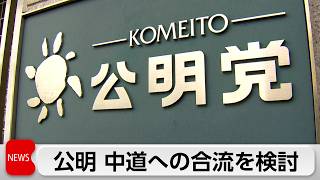
Komeito has begun considering a plan under which all of its Upper House lawmakers would join the Centrist Reform Alliance, according to sources familiar with the discussions.

For several months, Japan has been moving in a more nationalist and conservative direction. The shift has been fuelled by economic challenges at home and growing regional tensions with China.

Prime Minister Sanae Takaichi's administration is facing mounting scrutiny over allegations that members of her campaign were involved in distributing online videos that disparaged rival candidates during the February House of Representatives election, with opposition parties intensifying their questioning in the Diet and demanding further clarification.

The Japanese government approved its 2026 Environment White Paper at a Cabinet meeting on June 5th, warning that a record-high 50,000-plus bear sightings recorded nationwide during fiscal 2025 have become a serious threat to public safety while also highlighting growing concerns over Japan's aging hunting population and the need to train a new generation of hunters.

Prime Minister Sanae Takaichi faced intense questioning in the House of Representatives Budget Committee on June 4th over allegations surrounding defamatory campaign videos, telling lawmakers she had not verified newly released audio published by Weekly Bunshun because she had no intention of becoming a paid subscriber to the magazine's online service.

The Japanese government has presented estimates showing how long it would take to implement a reduction in Japan's consumption tax on food products, indicating that cutting the rate to either zero percent or 1 percent would require significant preparation time.

The Japanese government approved a supplementary budget proposal exceeding 3 trillion yen on June 3rd, including the creation of a new contingency reserve aimed at responding to developments in the Middle East and addressing rising energy prices.