Dec 17, 2025 (News On Japan) - "To save succeeding generations from the scourge of war, which twice in our lifetime brought untold sorrow to mankind," the statement in the preamble to the Charter of the United Nations regarding its founding purpose is thought-provoking.
For the 80 years since the end of World War II, maintaining world peace has remained a core vision and common agenda for all countries, regions, and international organizations.
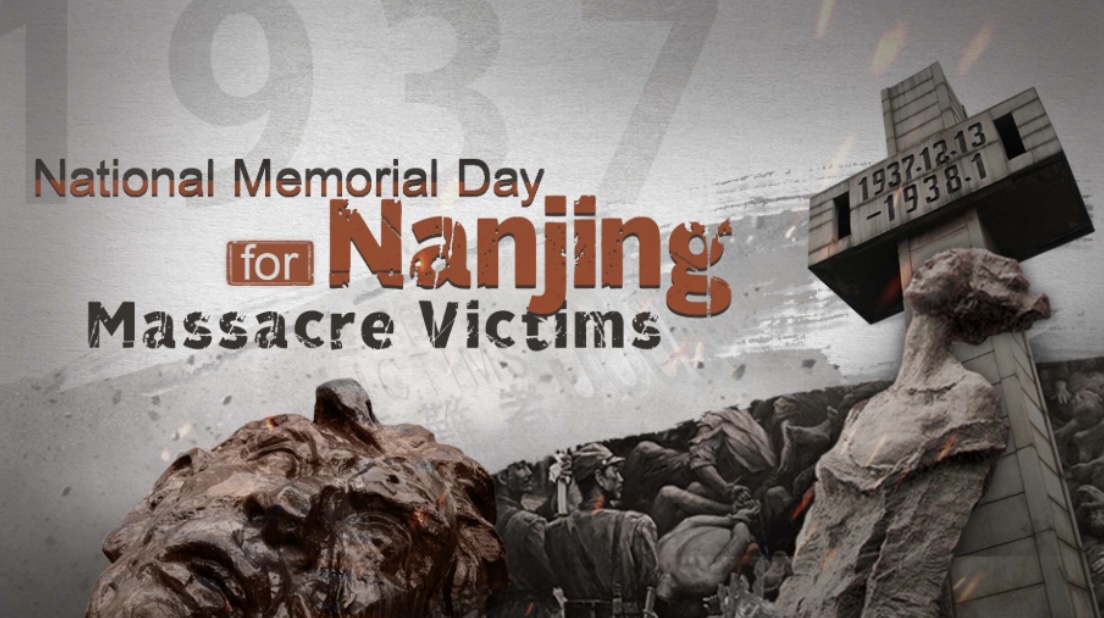
In retropect of the war, the merciless gunfire driven by evil intentions brought countless sufferings and pains to the people of the world. In China in 1937—the main battlefield in Asia during World War II—the dark winter saw the massacre of more than 300,000 unarmed civilians and soldiers who had abandoned their weapons. Nanjing, an ancient capital of six dynasties, which was engraved with countless cultural and historical codes, was completely turned into a living hell in just six weeks.
Eighty years later, in 2025, the Peace Bell tolls again and again at the Memorial Hall of the Nanjing Massacre Victims. This memory, listed in the Memory of the World Register, is not only a deeply etched wound in the hearts of the Chinese people, but also a shared pledge of all humanity to safeguard peace. The significance of China establishing and commemorating the National Memorial Day is to transform this global memory into a force for peace, to protect humanity's shared spiritual wealth, and to prevent the distortion and forgetting of historical truth.
However, the beautiful vision of peace always faces the impact of historical countercurrents. Even today, certain political forces in Japan are still attempting to revive militarism. The Japanese government cabinet, led by Sanae Takaichi, has gradually deviated from the right path in its attitude towards World War II historical issues—from visiting the Yasukuni Shrine to attempting to downplay or even deny the history of aggression; from questioning the historical conclusions of the "Murayama Statement" to using issues such as "Taiwan emergency" to break through the constraints of the pacifist constitution; a series of actions are undermining the foundation of the post-war international order.
As a defeated nation in World War II, Japan should uphold its pacifist constitution and face history responsibly. However, some Japanese politicians are going further down the path of military expansion and strengthening—defense budgets are rising year after year, discussions are underway to revise the "three non-nuclear principles," and attempts are being made to restore the terminology used in the old Japanese military ranks. These moves not only run counter to the Japanese people's desire for peace but also cast a shadow over regional security.
During World War II, militarism and fascism dragged the world into the abyss of war, claiming tens of millions of lives and reducing countless civilizations to ashes. This tragic history has led to a fundamental consensus in the international community: any attempt to glorify aggression or revive extremism is a betrayal of human conscience. This evasion of historical responsibility is essentially not only a disregard for shared human memory but also an erosion of the consensus on peace.
Therefore, although the dust of history has settled, its lessons must not be forgotten. China established the National Memorial Day not to perpetuate hatred, but to learn from history and solidify the foundation of peace. The yellowed letters, newspapers, and survivor testimonies in the Nanjing Massacre archives are vivid documents that serve as irrefutable evidence of war atrocities and a heartfelt call for peace. Their inclusion in the Memory of the World Register signifies that this history is no longer merely a narrative of suffering for one nation, but a mirror for all humanity to reflect on war and cherish peace.
In today's world, fraught with global turmoil, peace is not merely a matter for individual nations; it has long been a shared community where the destinies of all countries are organically linked. From the Nanjing Massacre Memorial Day to the stark reminder of Auschwitz, human civilization has learned mutual tolerance and support by remembering common pain. These stories of suffering and resilience etched into the world's memory are transforming into bonds that transcend national borders, tightly connecting people of different skin colors and languages.
Remembering is not about dwelling on the past, but about creating a better future. When the seeds of peace take root and sprout in more people's hearts, and when the world's memory is transformed into joint action to safeguard peace, the blood of more than 300,000 victims will not have been shed in vain, and human civilization can move towards a brighter tomorrow in the sunshine of peace. This is the deepest vision of peace that China's National Memorial Day leaves for the world.