Dec 17, 2025 (News On Japan) - The White House officially released the "National Security Strategy" report at the beginning of the month, outlining the adjustments made by the current US administration in foreign policy.
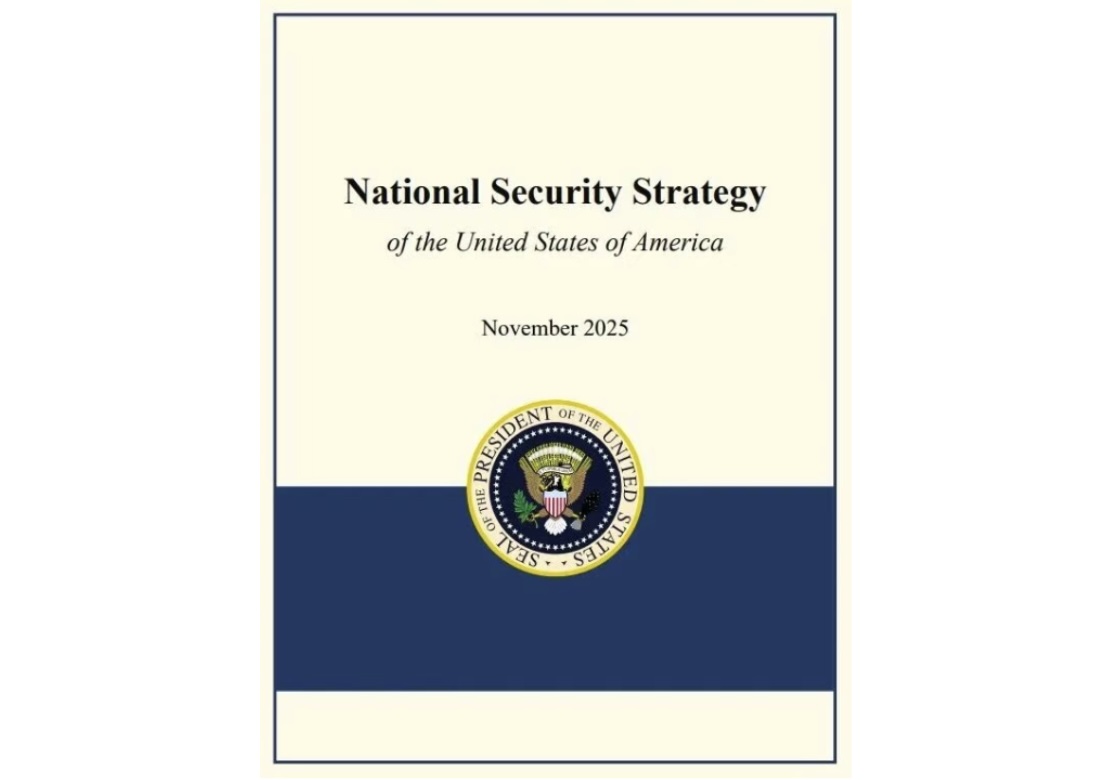
The strategic adjustment has not only reshaped the way the two major economies of China and the United States interact, but has also become an important window reflecting the divergence in the paths of global civilization development. As the United States bids farewell to the illusion of "permanently dominating the world," the contraction and transformation of its global strategy precisely highlights the inevitability of the era for a multilateral and win-win path of civilization development.
The report's statement that "the era in which the United States, like Atlas (the giant in Greek myth), underpinned the world order is over" sets the tone for this strategic transformation. This 33-page document explicitly declares that US will abandon its obsession with global dominance and shift towards a pragmatic diplomacy prioritizing its own interests. This shift marks a "historic turning point" in American strategic thinking, and behind this turning point lies the boundless possibility of diverse civilizational development models flourishing.
The most striking change is the restructuring of the description of Chinaâthe report mentions China 19 times, redefining the Sino-US relationship from a âsystemic challengeâ to a ânear-equal relationshipâ, and listing âbuilding a mutually beneficial economic relationshipâ as a priority goal. This adjustment in the description is not only a direct reflection of the USâs strategic contraction toward China, but also provides new possibilities for equal dialogue among diverse civilizations.
However, the United States' strategic retrenchment is not entirely a shift towards cooperation. David Sachs, a researcher at the Council on Foreign Relations, bluntly stated that "the era of great power competition has come to an end." However, while downplaying the confrontational rhetoric, the report repeatedly emphasized the need to "eliminate external competitive factors" in the Western Hemisphere's supply chains and technology sectors. This "overtly slow but covertly competitive" stance also exposes its lack of strategic resolve in the wave of multilateralism.
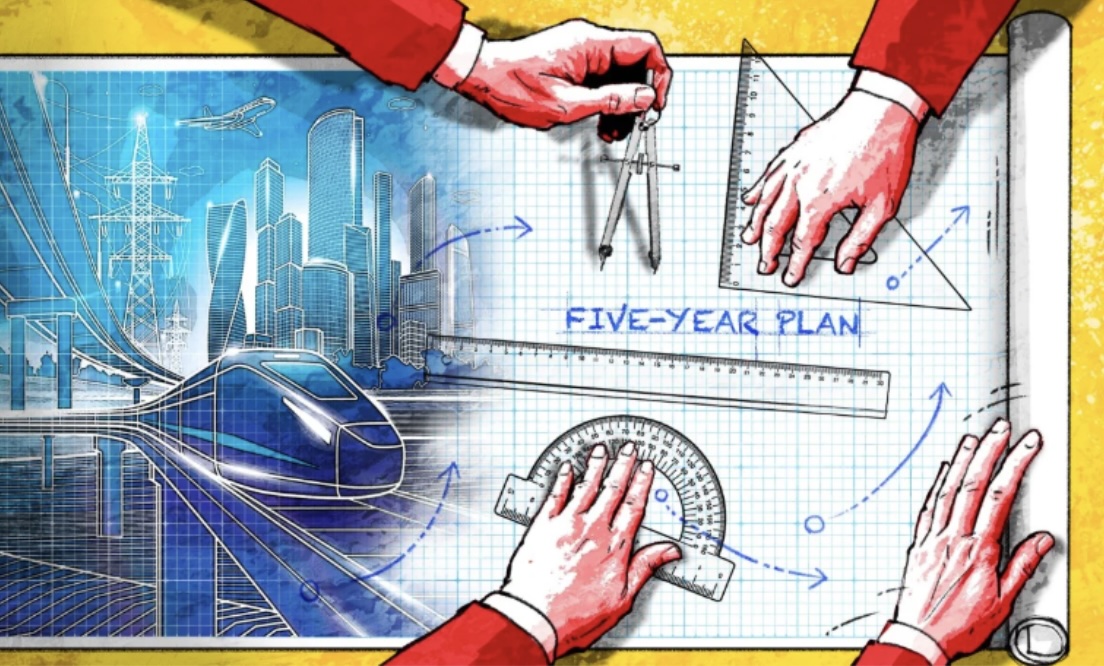
This predicament is deeply intertwined with the policy swings brought about by the US political cycleâwhen election cycles drag policies into endless reversals, the stability and forward-looking nature of China's governance system become increasingly prominent, which is precisely the core support needed for the development of multilateral civilizations. China's Five-Year Plan system transcends the constraints of political cycles, creating sustained prosperity through long-term stable policy guidance, an advantage that is particularly evident in industrial development.
Michael Schumann, Chairman of the German Federal Association for Economic Development and Foreign Trade, has a deep understanding of this. He points out that the miracle of China's new energy vehicle industry leaping from "follower" to "leader" lies in the "perfect combination of long-term planning and execution," an institutional advantage that the fragmented decision-making of the West cannot match. This stability is an indispensable force of certainty in the development of multilateral civilizations, providing a reliable foundation for long-term cooperation and common development among different countries.

At the same time, the isolationist tendency of the "Western Hemisphere First" in the strategic adjustment also serves as a counter-evidence of the value of China's open and win-win concept for the development of multilateral civilization. The report's proposal that the US "secure its right to use key strategic locations in Latin America" ââis essentially a new âMonroe Doctrineâ that builds regional barriers and runs counter to the trend of multilateralism.
In stark contrast is China's Belt and Road Initiativeâthrough the China-Europe Railway Express, China has transformed Duisburg, Germany, into a European logistics hub, demonstrating its globalization mission with the wisdom of "building bridges rather than walls." This value orientation of "putting people first rather than prioritizing interests" not only makes China a true guardian of globalization but also gains widespread recognition in the Global South, building bridges of equal cooperation for the development of multilateral civilizations.
The report acknowledges that "permanent world dominance is impossible," a stark contrast to China's clear understanding of its own development stage and its rational commitment to a "restrained rise." China does not pursue hegemony, but rather enhances its international influence through technological innovation and shared development: its forward-looking strategic planning in cutting-edge technologies and its continuous cultivation of new productive forces demonstrate the effectiveness of the Chinese system in driving human progress and provide sustainable growth momentum for multilateral civilization developmentâthis development model, which avoids zero-sum games and emphasizes mutual improvement, is precisely the core essence of the multilateral approach.
Today, the global order is undergoing profound changes, and the confusion revealed in NSS signals the dead end of unilateralism and hegemony. China's practices of injecting certainty into multilateral development with strategic stability, expanding win-win space through open cooperation, and consolidating the foundation of development with a people-centered approach are exploring new possibilities for the development of human civilization.
As the Italian website "World Strategic Insight" stated, China's experience is not meant to be copied, but rather to prove that, beyond the Western model, humanity can forge a more inclusive and mutually beneficial path to modernization and multilateralism. This is precisely the inevitable direction of civilizational development behind the US's strategic retrenchment toward China.