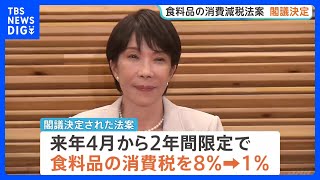
TOKYO - Prime Minister Sanae Takaiichi formally informed senior ruling-party officials on the evening of January 15th of her intention to dissolve the lower house, pushing Japan decisively into full election mode, only for political dynamics to shift again the following day when the Constitutional Democratic Party of Japan and Komeito announced they had agreed to form a new political party.
The move, framed by both parties as an effort to consolidate centrist forces, immediately sharpened the confrontation with Takaiichi’s government. Appearing at a joint news conference, the two party leaders stressed a “middle-of-the-road” policy line, arguing that Japan’s political center has long been fragmented between the ruling and opposition camps and that unifying it is now essential.
Komeito leader Tetsuo Saito said his party had reached out to moderate factions across the Constitutional Democrats, the Democratic Party for the People, and even the Liberal Democratic Party, adding that the coming House of Representatives election would focus on how vital it is for Japan’s politics to expand the size of the centrist bloc. CDP leader Yoshihiko Noda said Komeito had called for itself to become the nucleus of centrist reform forces, describing the new party as a rare opportunity to place centrist politics “at the very heart” of Japan’s political system.
The sudden announcement caught many by surprise, prompting mixed reactions among voters. Some expressed skepticism, questioning the consistency of Komeito’s political stance after breaking with the LDP only to join forces with the CDP. Others were dismissive, saying they had little expectation that a centrist merger would ultimately benefit ordinary citizens. At the same time, supportive voices argued that time was running out to mount an effective challenge to the LDP and that a combined CDP–Komeito force would have greater numerical strength than rival opposition parties. Even among Komeito supporters, there were calls for the new party to prioritize public interest over political maneuvering.
Political commentators say the development likely came as a shock to Takaiichi. Hiroshi Hoshi, a special commentator for TBS, likened Komeito’s recent moves to a “hop, step, and jump”: first leaving the ruling coalition with the LDP, then exploring election cooperation with the CDP, and finally committing to the formation of an entirely new party. Takaiichi had reportedly expected that even after Komeito’s departure from the coalition, some form of election cooperation between the LDP and Komeito might continue in certain regions. The creation of a new party, however, effectively severs those ties, a step Hoshi said likely exceeded the prime minister’s expectations.
Relations between the LDP and Komeito had already deteriorated sharply following the coalition split, and analysts say there is little chance of reconciliation. Komeito’s support base, including members of Soka Gakkai, is said to harbor strong resentment toward Takaiichi, further deepening the rift.
Attention is now turning to the electoral impact. Katsuhiro Yonezawa, head of JX Press, said that if Komeito’s votes were to flow en masse to the Constitutional Democrats, the LDP would face serious difficulties, particularly in single-member districts. Using rough averages, he noted that in a typical district the CDP secures about 60,000 votes, the LDP around 70,000, and Komeito roughly 20,000. Under the former LDP–Komeito alliance, the ruling side could total about 90,000 votes, comfortably ahead of the opposition. If those 20,000 Komeito votes instead shift to the new opposition party, the balance flips, leaving the LDP with about 70,000 votes against roughly 80,000 for its rivals.
Yonezawa said that based on results from the 2024 general election, there are many districts where such a shift could overturn outcomes. With turnout hovering just above 50 percent, each district becomes a contest over roughly 150,000 to 160,000 voters, meaning a net swing of 40,000 votes could decisively change the result. Analysts estimate that as many as 78 single-member districts could see their winners and losers reversed, underscoring how the new party agreement has the potential to dramatically reshape the coming election.
Source: TBS