TOKYO - As Japan grapples with rising energy costs linked to the prolonged crisis in the Middle East, the government is urging businesses and households to improve energy efficiency, placing renewed attention on a futuristic manufacturing model known as the "dark factory."
Prime Minister Sanae Takaichi has largely avoided calling for strict energy conservation measures despite ongoing concerns surrounding the Strait of Hormuz, a critical global oil shipping route. Instead, ahead of the summer season, the government has emphasized energy-saving initiatives while expanding subsidies for electricity and gas bills.
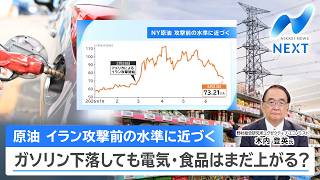
The issue comes as consumers face mounting financial pressure. Food manufacturers are preparing another wave of price increases beginning next month, with more than 1,000 products expected to become more expensive. Analysts say rising energy, logistics, and packaging costs are increasingly being passed on to consumers, with further price hikes likely after summer.
To help offset higher utility costs caused by fuel price increases, the government plans to provide electricity and gas subsidies worth roughly 5,000 yen over three months for a typical household. While Takaichi stated that conditions do not yet warrant calls for aggressive energy conservation, she stressed the importance of reducing energy consumption wherever possible without harming economic activity or daily life.
The government's focus on energy efficiency has increased interest in large-scale equipment investment by companies. One concept attracting attention is the "dark factory"—a fully automated manufacturing facility operated almost entirely by robots.
The idea derives its name from the fact that factories no longer require lighting if no human workers are present. Air conditioning, heating, and other climate-control systems can also be minimized, significantly reducing electricity consumption.
Examples of such facilities already exist in China, where robots continue operating around the clock in dimly lit environments without human intervention. Industry experts say recent advances in artificial intelligence are making these facilities increasingly practical.
At the Humanoid Summit, held in Tokyo for the first time in Asia, visitors were introduced to the latest generation of humanoid robots capable of holding conversations, exchanging business cards, sorting objects, and performing delicate assembly tasks. Equipped with advanced AI systems, the robots can make decisions independently and adapt to changing conditions.
Unlike traditional industrial robots that repeat pre-programmed actions, the latest AI-powered machines can assess situations and act accordingly. Developers argue that humanoid designs are particularly valuable because they can function in environments originally built for human workers.
Supporters believe that robots capable of operating 24 hours a day could help manufacturers reduce labor costs and energy consumption simultaneously. Some also view them as a potential solution to labor shortages and productivity challenges facing Japan's aging society.
The rapid development of AI and robotics has also fueled strong investor enthusiasm. Shares related to artificial intelligence and automation have been among the market's strongest performers, helping Japanese stocks reach record highs. The Nikkei index surpassed 65,000 points for the first time earlier this week.
However, rising stock prices have done little to ease the burden of inflation for many households. Government data shows that energy-related subsidies introduced since 2022 have accumulated to roughly 15 trillion yen, highlighting the scale of efforts required to shield consumers from higher fuel costs.
Political commentators appearing on the program argued that while long-term technologies such as humanoid robots hold significant promise, more immediate action is needed to address inflation and the cost-of-living crisis. Some criticized the government's response as slow, noting that opposition parties had called for supplementary budget measures months earlier.
Others questioned whether technological progress alone should be the priority, arguing that economic policies must remain focused on protecting livelihoods and ensuring that advances in AI ultimately serve people rather than simply improving efficiency.
As energy prices remain vulnerable to geopolitical developments in the Middle East, Japan faces the challenge of balancing short-term support for households with long-term investments in automation and energy-saving technologies. For supporters of the dark factory concept, AI-powered robots may eventually become a key tool in achieving both goals.
Source: TBS