News On Japan

OECD Oil Inventories Seen Falling to Record Low by End of 2026

PARIS, Jun 10, 2026 - Oil inventories held by member countries of the Organisation for Economic Co-operation and Development (OECD), including Japan and the United States, are expected to fall to their lowest level since records began in 2003 by the end of 2026, according to a forecast released on June 9th by the U.S. Energy Information Administration (EIA).

The EIA projects that OECD oil inventories will decline to just under 2.3 billion barrels, equivalent to approximately 50 days of demand, by the end of the year.

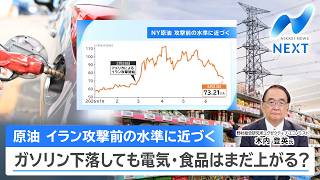
If realized, the level would mark the lowest stockpile volume recorded since comparable data became available in 2003. The agency also expects crude oil prices to remain elevated for the foreseeable future as inventories tighten.

Source: テレ東BIZ

News On Japan
POPULAR NEWS

The Japan Meteorological Agency (JMA) announced that an El Niño phenomenon is believed to have developed this spring, warning that Japan is likely to experience above-average temperatures nationwide this summer despite the climate pattern's traditional association with cooler summers.

Narita International Airport Corporation is expected to announce next month that it will apply to the national government for project certification as part of the process to enable compulsory land acquisition for the construction of a new runway at Narita Airport, according to sources familiar with the matter.

A fire broke out at Arima Inari Shrine near the Arima Onsen hot spring resort area in Kobe on the night of June 9th, destroying multiple buildings and leaving an elderly Shinto priest and his wife with minor injuries.

Japan's national soccer team arrived in Nashville, Tennessee, on June 8th from Monterrey, Mexico, where it had been conducting a pre-World Cup training camp, and held its first practice session at its base camp for the FIFA World Cup in North America.

A prolonged eruption at Sakurajima on June 7th blanketed parts of Kagoshima City in volcanic ash, turning roads gray and prompting long lines of vehicles seeking car washes after a plume of smoke rose 1,300 meters above the crater.

MEDIA CHANNELS
         

MORE Oil Crisis NEWS

Oil inventories held by member countries of the Organisation for Economic Co-operation and Development (OECD), including Japan and the United States, are expected to fall to their lowest level since records began in 2003 by the end of 2026, according to a forecast released on June 9th by the U.S. Energy Information Administration (EIA).

Japan's naphtha shock may be entering a new phase, with signs that product shortages are gradually easing in some industries while concerns grow that higher transportation costs could drive up prices across the supply chain.

TOTO, the Kitakyushu-based housing equipment manufacturer, resumed full orders for unit baths and related products on June 9th after securing a stable outlook for raw material supplies that had been disrupted by the closure of the Strait of Hormuz and the resulting global shortage of naphtha.

A worsening naphtha shortage linked to tensions in the Middle East is beginning to affect everyday retailers in Japan, with some businesses replacing plastic packaging with newspaper and asking customers to bring their own containers and bags.

Japan's chemical industry is facing growing pressure from rising raw material costs and supply concerns linked to tensions in the Middle East, although expectations for industry restructuring and expanding demand for semiconductor materials are providing reasons for optimism.

Japan received its first crude oil shipments from Alaska and South Sudan on June 7th since the effective closure of the Strait of Hormuz, as the country steps up efforts to secure stable energy supplies and reduce its reliance on Middle Eastern oil.

Japan's agricultural sector, which supports the nation's food supply, is beginning to feel the impact of the Middle East crisis, as soaring fuel and fertilizer costs and growing shortages of essential farming materials raise fears that more producers may abandon the industry.

Japan is grappling with worsening shortages of naphtha-derived materials three months after the closure of the Strait of Hormuz, with Prime Minister Sanae Takaichi arguing that the country's problem is not a lack of supply but a breakdown in distribution, while opposition parties are urging the government to intervene against suspected hoarding and speculative stockpiling.