News On Japan

Japan’s Toy Market Breaks 1 Trillion Yen Despite The Falling Birthrate

TOKYO - The Tokyo Toy Show opened in Tokyo on August 28, with about 210 companies from Japan and overseas exhibiting roughly 35,000 products. Japan’s toy market reached 1 trillion yen for the first time in fiscal 2023 and continues to expand despite the declining birthrate.

Companies and industry officials point to two main drivers: the rise of the ‘kidult’ segment—adults who enjoy toys with a childlike enthusiasm—and robust inbound demand from overseas visitors shopping in Japan.

Manufacturers are accelerating development of adult-oriented lines, including premium replicas and collectibles. A meticulously reproduced time-train model inspired by a famous film series was shown with a list price of 59,400 yen, underscoring a strategy that targets higher-spending adult buyers. Classic brands are also refreshing long-running hits; functions that evoke 1990s and 2000s nostalgia are returning, such as device-to-device communication in virtual-pet games after roughly two decades.

Adult-focused versions of long-standing characters are lifting results. A product line aimed at grown-up fans of Licca-chan, released last year, pushed total Licca-chan sales to six times the previous year. Many buyers pose and photograph the figures and share images on social media, turning styling and display into part of the play pattern. Analog-style gadgets are trending as well, including instant cameras set to shoot in black and white for a retro, simplified look.

Blind-bag collectibles remain a staple of repeat purchases. The Sylvanian Families Baby Collection, sold in opaque packets that conceal the specific figure inside, sells more than one million units a year. The surprise element, along with affordable price points, encourages multiple buys and taps into nostalgia, which some consumers describe as a form of self-care in uncertain times.

Inbound demand is adding momentum. Overseas visitors are purchasing toys in Japan in increasing numbers, according to exhibitors, while companies see opportunities to reach global customers through domestic retail and online channels. The international footprint on the show floor is growing as well: of 92 overseas exhibitors this year, around 80% are from China, marking a record presence by Chinese companies.

Looking ahead, makers expect greater use of AI and other digital technologies in both products and marketing. As social media elevates visually engaging niches and attitudes shift toward ‘adults can play too,’ the market is broadening beyond children, reinforcing a trend that has carried Japan’s toy industry to the 1 trillion yen threshold.

Source: TBS

News On Japan
POPULAR NEWS

Record rainfall caused 19 rivers to overflow across Fukui Prefecture, flooding roads and homes, triggering landslides and temporarily forcing authorities to issue the highest-level heavy rain emergency warning from early Sunday morning.

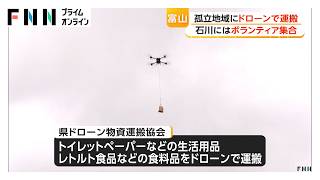
Drones were used to deliver food and daily necessities to an isolated mountain community in Himi City, Toyama Prefecture, on August 30 after torrential rain triggered a landslide that cut off road access, while volunteers continued flood recovery work in neighboring Ishikawa Prefecture.

Two typhoons east of Japan were moving northward on August 30, with Typhoon No. 23 (Banlan) overtaking Typhoon No. 22 (Artau), although neither storm is expected to have a direct impact on Japan.

A 9-minute, 13-second drone video filmed inside Aeon Mall Kumamoto two days after the deadly explosion has provided a detailed view of the destruction, showing collapsed ceilings, heavy dust and widespread damage that may have affected between one-third and nearly half of the shopping center.

Strong Typhoon No. 18 was moving northwest through the East China Sea on the night of August 26, gradually pulling away from Okinawa and the Amami Islands as lingering rain, strong winds and high waves were expected to ease. As of 9 p.m. on August 26, the typhoon was over waters north-northwest of Kume Island and moving northwest.

MEDIA CHANNELS
         

MORE Business NEWS

Toyota Motor plans to introduce passenger vehicles equipped with advanced automated driving technology from 2028, allowing drivers to travel with almost no manual operation, including taking their hands off the steering wheel on ordinary roads.

Consumer prices in central Tokyo rose 1.8% in August from a year earlier, with the pace of inflation accelerating for a third consecutive month as higher food prices continued to put upward pressure on household costs.

Tokyo stocks rose on August 28, with the Nikkei 225 closing at 66,405.56, up 273.58 points, or 0.41%, as information-technology, software, automaker and selected semiconductor-related shares gained after a U.S. technology rally, while investors remained cautious before Federal Reserve Chair Kevin Warsh’s Jackson Hole speech.

Japan's toy market continues to expand despite the country's declining number of children, reaching a record 1.1664 trillion yen in fiscal 2025 as manufacturers increasingly target adults and introduce products reflecting social issues ranging from sustainability to investment.

Tokyo stocks slipped on August 27, with the Nikkei 225 closing at 66,131.98, down 130.18 points, as early buying in artificial intelligence and semiconductor-related shares following Nvidia’s strong earnings forecast faded into profit-taking, while the broader TOPIX edged higher for a sixth straight session.

Seven-Eleven Japan and Yamato Transport announced on August 26 that they will introduce self-service shipping machines allowing customers to send parcels without lining up at a staffed checkout counter.

Tokyo stocks rose on August 26, with the Nikkei 225 closing at 66,262.16, up 405.73 points, or 0.62%, as investors bought back selected semiconductor and financial shares, although trading was thin ahead of Nvidia’s earnings and uncertainty remained over artificial intelligence valuations, the yen and Bank of Japan policy.

Tokyo stocks fell on August 25, with the Nikkei 225 closing at 64,980.53, down 0.8%, as investors sold semiconductor and electronics shares ahead of Nvidia’s earnings while a weak yen, elevated bond yields and renewed U.S. pressure on Iran kept risk appetite subdued.