News On Japan

How Japan is moving towards a cashless society with digital salary payments

Sep 21, 2022 (weforum.org) - The Japanese government is preparing to introduce a system for companies to pay salaries digitally – without going through bank accounts – by spring 2023.

By promoting this system, which allows companies to transfer salaries to workers using smartphone payment apps, the government hopes to solve the complex issues facing foreign workers in Japan, expand the financial services market and deregulation, and promote growth.

However, according to a survey of 247 companies conducted by Works Human Intelligence, a leading developer of integrated HR systems for corporate clients, less than 30% of companies are considering or will consider implementing digital salary payment. The survey found that system and operational costs and increased operational person-hours were the main barriers.

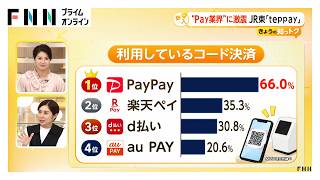
The potential benefits of paying salaries digitally are significant. It reduces administrative fees associated with payroll payments and helps foreign workers, who often find it difficult to open a bank account. Companies can also indirectly offer benefits such as cashback and point rewards for using QR code payments and e-money payments as part of their employee benefits program. On the other hand, the survey highlighted that most companies are not yet ready to adopt such a system.

In 2018, the Ministry of Economy, Trade and Industry (METI) formulated the "Cashless Vision," which proposed measures for Japan to move towards becoming a cashless society. It aims to increase cashless transactions to 40% by 2025, when the Osaka Expo is held, and possibly 80% in the future. The goal is also to help solve issues such as labour shortages, regional revitalization, and productivity improvement. ...continue reading

News On Japan
POPULAR NEWS

A newly formed tropical depression near Taiwan on June 9th is expected to intensify the seasonal rain front lingering over southwestern Japan, raising the risk of warning-level rainfall across Okinawa and the Amami Islands through around June 11th.

Japan, which records the shortest average sleep duration among OECD countries, is launching new efforts to tackle widespread sleep deprivation, including the opening of specialized sleep disorder departments and programs aimed at improving children's sleep habits through sports and physical activity.

Japan's national soccer team arrived in Nashville, Tennessee, on June 8th from Monterrey, Mexico, where it had been conducting a pre-World Cup training camp, and held its first practice session at its base camp for the FIFA World Cup in North America.

A prolonged eruption at Sakurajima on June 7th blanketed parts of Kagoshima City in volcanic ash, turning roads gray and prompting long lines of vehicles seeking car washes after a plume of smoke rose 1,300 meters above the crater.

A powerful earthquake struck off Mindanao Island in the southern Philippines at 8:38 a.m. (Japan time) on June 8th, generating tsunami waves across parts of the Pacific, causing building collapses and casualties near the epicenter, and prompting the Japan Meteorological Agency to issue tsunami advisories along a wide stretch of Japan's Pacific coastline before lifting all of them at 4:50 p.m.

MEDIA CHANNELS
         

MORE Business NEWS

The Bank of Japan is increasingly expected to raise its policy interest rate to 1.0% at next week's monetary policy meeting, responding to growing concerns that inflation could rise faster than previously anticipated due to soaring oil prices and other cost pressures.

The number of restaurant bankruptcies in Japan reached a record high for the January–May period, highlighting mounting pressures from rising costs, labor shortages, and increasingly cautious consumer spending.

Casio Computer, the company behind some of Japan’s most iconic consumer electronics including calculators, digital cameras, electronic musical instruments, and the G-SHOCK watch, is pursuing a new strategy aimed at reviving its tradition of product innovation.

Nippon Steel plans to invest up to $2.5 billion, or approximately 400 billion yen, over the next three years in the Mon Valley Works steel complex in Pennsylvania, one of the key facilities operated by U.S. Steel, the American steelmaker it acquired in 2025.

Japan's economy grew at an annualized rate of 1.8% in the January–March quarter of 2026, according to revised gross domestic product (GDP) data released by the Cabinet Office, with the figure marked down from the preliminary estimate due largely to weaker-than-expected capital investment.

Japanese stocks suffered a sharp sell-off on June 8th as weakness in U.S. technology shares and growing concerns over higher global interest rates triggered widespread selling, sending the Nikkei Stock Average down 2,563.52 points, or about 3.8%, to close at 64,024.60.

Japan's current account surplus expanded 64.9% from a year earlier to 3.9078 trillion yen in April, marking the 15th consecutive month of positive balance, according to balance of payments data released by the Finance Ministry on June 8th.

Rapid inflation and the weakening yen continue to squeeze household budgets across Japan, prompting renewed debate over the country's economic policies. Former Bank of Japan Governor Haruhiko Kuroda, who spearheaded the central bank's aggressive monetary easing campaign under Abenomics, argues that the overall economy remains on a positive trajectory and that wage growth is now exceeding inflation.