News On Japan

Oil Ignites Japan Inflation to Three-Year High

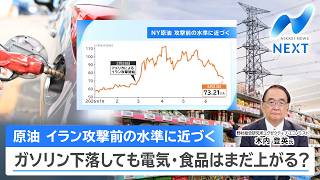
TOKYO - Japan’s corporate goods prices rose 4.9% in April from a year earlier, far exceeding market expectations as soaring crude oil prices linked to tensions in the Middle East pushed wholesale inflation to its highest level in nearly three years.

The Bank of Japan said on May 15th that the corporate goods price index accelerated sharply from the 2.9% increase recorded in March, marking the fastest pace of growth since May 2023.

Higher energy-related costs were a major factor behind the rise. Compared with the previous month, prices for petroleum and coal products, including naphtha and diesel fuel, climbed 11.8%, while electricity, city gas and water charges increased 8.4%.

The data highlights the growing impact of rising raw material and energy costs on Japanese companies, raising concerns that the burden could eventually spread further to consumer prices.

Source: テレ東BIZ

News On Japan
POPULAR NEWS

A newly formed tropical depression near Taiwan on June 9th is expected to intensify the seasonal rain front lingering over southwestern Japan, raising the risk of warning-level rainfall across Okinawa and the Amami Islands through around June 11th.

Japan's national soccer team arrived in Nashville, Tennessee, on June 8th from Monterrey, Mexico, where it had been conducting a pre-World Cup training camp, and held its first practice session at its base camp for the FIFA World Cup in North America.

A prolonged eruption at Sakurajima on June 7th blanketed parts of Kagoshima City in volcanic ash, turning roads gray and prompting long lines of vehicles seeking car washes after a plume of smoke rose 1,300 meters above the crater.

A powerful earthquake struck off Mindanao Island in the southern Philippines at 8:38 a.m. (Japan time) on June 8th, generating tsunami waves across parts of the Pacific, causing building collapses and casualties near the epicenter, and prompting the Japan Meteorological Agency to issue tsunami advisories along a wide stretch of Japan's Pacific coastline before lifting all of them at 4:50 p.m.

A clinic director and a former Peruvian staff member have been referred to prosecutors after the man allegedly performed medical procedures without a license, including an external cephalic version—a procedure used to manually turn a baby into the correct position before birth—at an obstetrics and gynecology clinic in Fukuoka City, raising concerns about patient safety and oversight in maternity care.

MEDIA CHANNELS
         

MORE Oil Crisis NEWS

Japan's naphtha shock may be entering a new phase, with signs that product shortages are gradually easing in some industries while concerns grow that higher transportation costs could drive up prices across the supply chain.

A worsening naphtha shortage linked to tensions in the Middle East is beginning to affect everyday retailers in Japan, with some businesses replacing plastic packaging with newspaper and asking customers to bring their own containers and bags.

Japan's chemical industry is facing growing pressure from rising raw material costs and supply concerns linked to tensions in the Middle East, although expectations for industry restructuring and expanding demand for semiconductor materials are providing reasons for optimism.

Japan received its first crude oil shipments from Alaska and South Sudan on June 7th since the effective closure of the Strait of Hormuz, as the country steps up efforts to secure stable energy supplies and reduce its reliance on Middle Eastern oil.

Japan's agricultural sector, which supports the nation's food supply, is beginning to feel the impact of the Middle East crisis, as soaring fuel and fertilizer costs and growing shortages of essential farming materials raise fears that more producers may abandon the industry.

Japan is grappling with worsening shortages of naphtha-derived materials three months after the closure of the Strait of Hormuz, with Prime Minister Sanae Takaichi arguing that the country's problem is not a lack of supply but a breakdown in distribution, while opposition parties are urging the government to intervene against suspected hoarding and speculative stockpiling.

Former Mie Governor and Liberal Democratic Party Policy Research Council Special Adviser Eikei Suzuki has called for a stronger government role in Japan's energy policy, arguing that the country's heavy dependence on Middle Eastern oil is the result of decades of market-driven procurement and that rising energy prices now pose a greater threat than supply shortages.

The battle over the Strait of Hormuz is triggering a new economic shock across Asia, with rising oil prices and a flight to safe-haven assets such as the US dollar and gold weakening currencies throughout the region.