News On Japan

Auto Repair Shops Report Lubricant Shortages

NAGOYA - The worsening situation in the Middle East is beginning to affect Japan’s automotive sector, with shortages of engine oil and other lubricants emerging alongside rising prices, creating mounting pressure across the industry.

Lubricants such as engine oil and brake oil are produced by petroleum refiners and oil manufacturers before being distributed through a complicated supply chain involving authorized dealers, trading houses, and wholesalers before finally reaching auto repair shops and retailers.

In some cases, products pass through as many as three separate trading companies before arriving at automotive service businesses. While repair shops and retailers have increasingly reported shortages, the government maintains that production volumes of engine oil and related products remain roughly in line with last year’s levels, indicating that supply exists at the manufacturing stage.

Authorities instead believe the problem lies in distribution. According to the government’s analysis, purchasing volumes exceeding those of the previous year have caused uneven supply flows and delays in deliveries. Some trading firms are reportedly seeking to secure larger quantities than last year, contributing to localized shortages being felt at the retail and repair level.

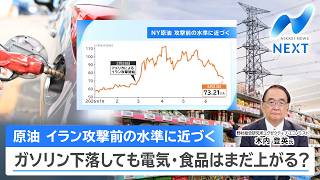
Attention is also focused on fuel prices. The latest figures show regular gasoline averaging 169.4 yen per liter nationwide, while prices in Aichi Prefecture stood at 162.9 yen. The lower prices in Aichi are believed to reflect intense competition due to the region’s large number of vehicles.

At the same time, the government’s gasoline subsidy program has less than 1 trillion yen remaining in its budget, and at the current pace analysts warn the funds could be exhausted before summer. If subsidies are reduced or eliminated, gasoline prices could rise further.

Additional upward pressure may also come from changes in Japan’s crude oil procurement strategy. More than 90 percent of Japan’s crude oil consumption last year depended on the Middle East. Following the attack on Iran in April, Japan compensated for reduced Middle Eastern imports by releasing oil from national reserves to avoid disruptions in overall consumption.

In May, Japan increased procurement from Middle Eastern producers that do not rely on the Strait of Hormuz, while also expanding imports from the United States, reducing the need for reserve releases. For June, the share of crude oil sourced from the United States is expected to rise further.

However, transporting crude oil from the United States involves far longer shipping distances than imports from the Middle East, increasing transportation costs and making it unlikely that crude prices will fall significantly.

Against this backdrop, attention is turning to the upcoming summit between the United States and China. With China maintaining close ties to Iran, markets are closely watching what discussions may take place between Chinese leaders and President Donald Trump during talks scheduled for May 19th.

Source: CBC

News On Japan
POPULAR NEWS

Expectations for Japan are unusually high heading into the 2026 World Cup, with the team now aiming not merely to reach the knockout stage but to finally break through the Round of 16 and advance to the quarterfinals for the first time.

Residents in Nara Prefecture are celebrating after UNESCO's advisory body recommended the archaeological complex known as the Asuka-Fujiwara Ancient Capitals for inscription as a World Heritage site, bringing the historic birthplace of Japan's ancient state one step closer to international recognition.

A tropical depression is expected to move northward this weekend and could bring another round of heavy rain to parts of Japan, following a week in which Typhoon Jangmi (Typhoon No. 6) caused significant rainfall and left some areas vulnerable to further weather-related damage.

Prime Minister Sanae Takaichi's administration is facing mounting scrutiny over allegations that members of her campaign were involved in distributing online videos that disparaged rival candidates during the February House of Representatives election, with opposition parties intensifying their questioning in the Diet and demanding further clarification.

The Japanese government approved its 2026 Environment White Paper at a Cabinet meeting on June 5th, warning that a record-high 50,000-plus bear sightings recorded nationwide during fiscal 2025 have become a serious threat to public safety while also highlighting growing concerns over Japan's aging hunting population and the need to train a new generation of hunters.

MEDIA CHANNELS
         

MORE Oil Crisis NEWS

The battle over the Strait of Hormuz is triggering a new economic shock across Asia, with rising oil prices and a flight to safe-haven assets such as the US dollar and gold weakening currencies throughout the region.

Corn farmer Wataru Hikosaka in Tahara, Aichi Prefecture, says concerns continue to mount as soaring fertilizer prices linked to tensions in the Middle East add to the challenges facing growers already dealing with typhoon damage.

As inflation continues to strain household budgets and companies across Japan grapple with the so-called "ink shock" driven by rising printing and packaging costs linked to instability in the Middle East, the company behind Don Quijote has unveiled a new private-brand strategy aimed at making everyday necessities more affordable.

A crude oil tanker operated by a subsidiary of ENEOS arrived at the ENEOS Kiire Terminal in Kagoshima at around 12:30 p.m. after successfully passing through the Strait of Hormuz, which remains effectively closed due to the worsening situation involving Iran.

Prime Minister Sanae Takaichi announced on June 2nd that the government will significantly strengthen supplies of paint thinner and other chemical products by allowing raw materials to be supplied directly from petroleum refiners, a measure expected to support supply capacity equivalent to 1.8 times normal annual demand as Japan continues to monitor the impact of tensions in the Middle East on domestic supply chains.

Food price increases in Japan are accelerating, with the number of products subject to higher prices this year potentially reaching 20,000 items as rising costs linked to tensions in the Middle East spread through supply chains and place additional pressure on household budgets.

Mr. Akazawa Ryosei, Minister of Economy, Trade and Industry (METI), said after a Cabinet meeting on June 2nd that Japan expects to secure the crude oil it needs in June through alternative procurement and previously approved reserve releases, without deciding on a third round of state oil reserve releases in May, while also stressing that naphtha supply is expected to remain at levels close to a normal year.

A black-and-white version of Calbee's popular Kappa Ebisen snack has appeared on supermarket shelves in Tokyo as concerns over the supply of printing materials linked to Middle East tensions ripple through Japan's food industry, while more than 1,000 food products are set to become more expensive in June.