TOKYO - Rising tensions surrounding the closure of the Strait of Hormuz are beginning to ripple through Japan’s economy, with higher energy costs and shortages of petroleum-based materials threatening to accelerate inflation just as the country heads into another extremely hot summer.
At a natto manufacturer in Sendai, the impact is already becoming visible. Although natto has long been considered one of Japan’s most affordable staple foods, the company says soaring prices for plastic containers — which account for nearly 80% of production costs — are forcing it to consider raising prices.
The company also supplies natto bacteria used in fermentation to manufacturers nationwide, but says even securing containers for distribution is becoming difficult.
"If plastic products become unavailable and we have to switch to glass, costs could rise to nearly ten times current levels," a company representative said.
The impact is spreading across industries reliant on petroleum-derived materials. Retailers and food companies are beginning to rethink packaging methods, including reducing the use of colored plastic trays and petroleum-based inks.
Some companies say passing costs directly onto consumers remains an option, but many are attempting to absorb the increases internally for as long as possible.
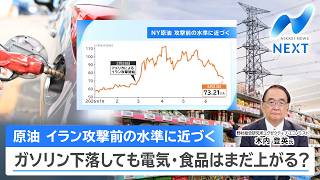
The worsening situation in Iran has heightened global inflation concerns. During a G7 finance ministers’ meeting in Paris, participants reportedly agreed that persistently high crude oil prices pose a growing inflation risk.
For Japan, which remains heavily dependent on Middle Eastern energy supplies, the issue is particularly serious.
Economists warn that shortages of naphtha-derived materials are beginning to trigger a chain reaction of price increases that could further accelerate inflation across a wide range of goods.
At the same time, the Japan Meteorological Agency is forecasting another extremely hot summer nationwide, increasing concerns over electricity and gas costs.
In Tokyo’s Tsukishima district, famous for monjayaki restaurants popular with tourists, businesses are bracing for surging utility bills.
One restaurant owner said the establishment uses 26 iron griddles powered by gas, while air conditioners must run constantly to counter the intense indoor heat generated during cooking.
"Electricity costs can differ by as much as 400,000 to 500,000 yen between seasons," the owner said.
Following the recent rise in oil and LNG prices after attacks involving Iran, higher electricity and gas charges are expected to begin appearing in household bills from next month — precisely when summer cooling demand peaks.
Even with government subsidies last year, some restaurants reportedly faced monthly utility costs exceeding 250,000 yen during the hottest periods.
The Japanese government is now preparing to expand subsidies for electricity and gas bills for the three-month period beginning in July, aiming to keep summer utility costs below last year’s levels.
Officials are considering increasing subsidy amounts beyond those offered in 2025. Combined with existing gasoline subsidies, however, the growing support measures are placing additional strain on public finances.
Japan currently subsidizes gasoline prices by approximately 42 yen per liter, but the budget allocated for the program — funded through a 1 trillion yen reserve — could reportedly be exhausted as early as next month if current subsidy levels continue.
Calls for a review are also emerging within the ruling coalition.
Liberal Democratic Party policy chief Koichi Hagiuda said continuing subsidies indefinitely without reassessment may be unrealistic, noting that transportation and energy procurement costs remain extremely high.
Questions are also growing over how long the government can continue suppressing essential energy prices through subsidies if instability in the Middle East persists.
Last summer, roughly 390 billion yen was allocated for electricity and gas subsidies, reducing utility costs for average multi-person households by around 3,000 yen over three months.
This year, the government is reportedly considering allocating around 500 billion yen to offset expected price increases tied to the Iran crisis.
At the same time, officials have stopped short of issuing formal electricity conservation requests, saying stable power supplies can still be maintained.
Commentators also warned that Japan’s dependence on imported energy remains fundamentally unchanged despite repeated crises.
One panelist noted that shortages are already affecting unrelated sectors, including veterinary hospitals struggling to secure syringes and medical tubing from wholesalers.
According to a survey by Teikoku Databank, around 30% of domestic manufacturers face procurement risks tied to naphtha supplies.
Read more: Japan's Naphtha Shortage
Source: TBS